Table of Contents
Introduction
Global infrastructure is hitting a wall. Engineers and municipalities are increasingly frustrated by the "fix-and-repeat" cycle common with legacy materials. Metal rots. Concrete cracks. The hidden costs of traditional water systems—catastrophic leaks, rapid corrosion in aggressive soils, and maintenance bills that devour budgets—are no longer sustainable. These failures don't just disrupt city services; they erode the profitability of industrial projects.
For B2B buyers, wholesalers, and contractors, switching to High-Density Polyethylene (HDPE) is more than a material swap—it is a strategic move toward operational resilience. HDPE offers a modern, factory-engineered solution that solves the vulnerabilities inherent in aging infrastructure. This article dissects the six core technical advantages that make HDPE the definitive choice for reliable water supply, equipping procurement managers with the material science and data needed to make the switch.
Superior Durability & Generational Service Life
Material Science: The Molecular Defense Against Stress
The toughness of HDPE isn't accidental; it’s molecular. Unlike brittle materials that fracture under sudden pressure, HDPE relies on a semi-crystalline structure that provides exceptional ductility and tensile strength. For industrial buyers, the most critical metric here is resistance to Slow Crack Growth (SCG).
Premium HDPE resins are engineered to stop environmental stress cracking in its tracks. Through advanced polymerization, long polymer chains are entangled to prevent cracks from propagating, even when the pipe faces point loading or surface scratches. This inherent toughness ensures structural integrity remains intact, whether the pipe is facing external ground loads or internal pressure surges.
Lifespan Analysis: 50+ Years vs. The 20-Year Metal Cycle
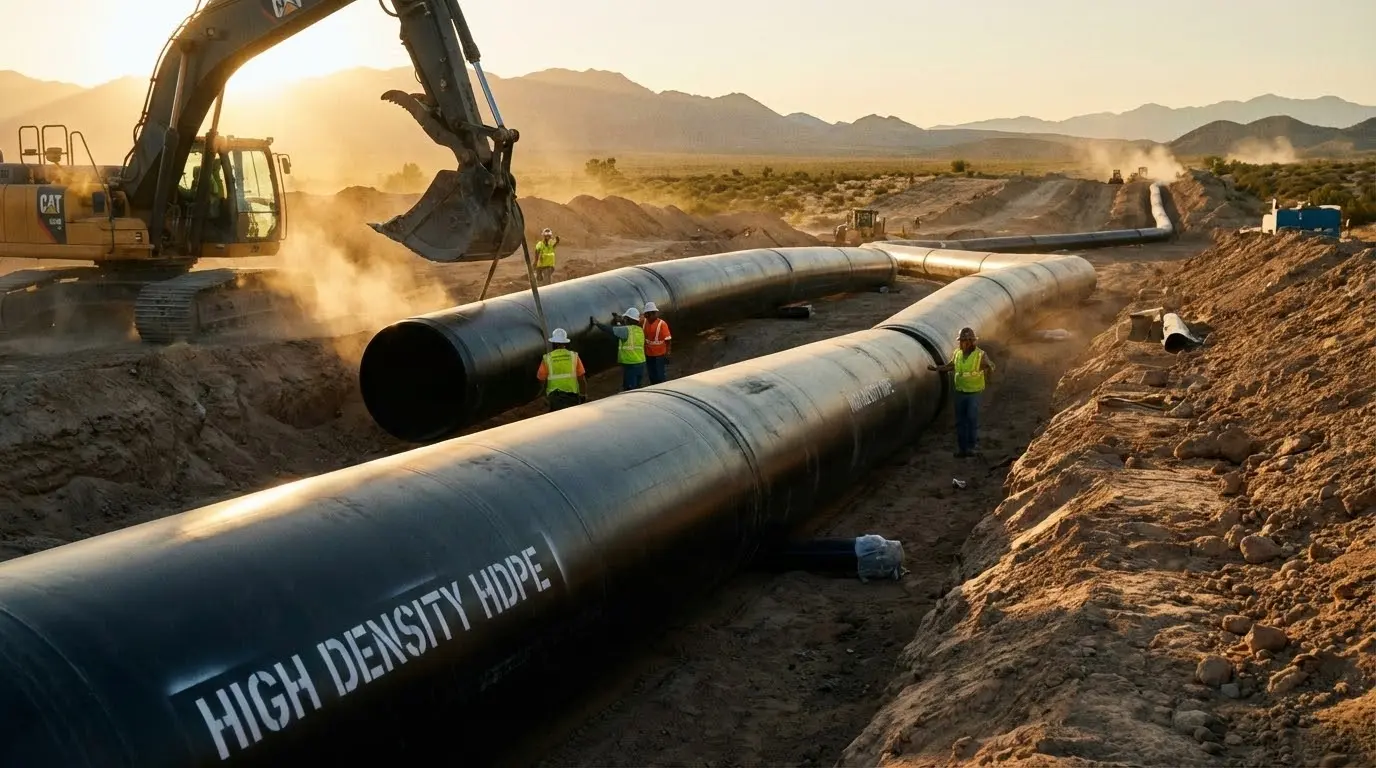
In infrastructure, longevity is the only metric that matters. Technical data confirms that HDPE pipes deliver a service life ranging from 50 to 100 years, depending on the operating environment. Contrast this with galvanized steel or concrete, which often suffer significant degradation via oxidation and spalling within just 15 to 25 years.
For water authorities, this gap in performance changes the game. While a ductile iron system might demand major rehabilitation after two decades, an HDPE system installed today is built to serve the next generation.
ROI Justification: The True Cost of Ownership
The "sticker price" of a pipe is deceptive. It represents only a fraction of the Total Cost of Ownership (TCO). When procurement teams run the numbers, HDPE wins on ROI. By extending the replacement cycle by 2x or 3x compared to legacy materials, asset owners bypass the massive capital expenditures associated with re-excavation, new procurement, and labor.
Moreover, durability kills emergency repair costs. A system that runs for a century without major intervention frees up capital for expansion rather than maintenance.
Absolute Corrosion & Chemical Immunity
Inert Properties: Defeating Aggressive Soils
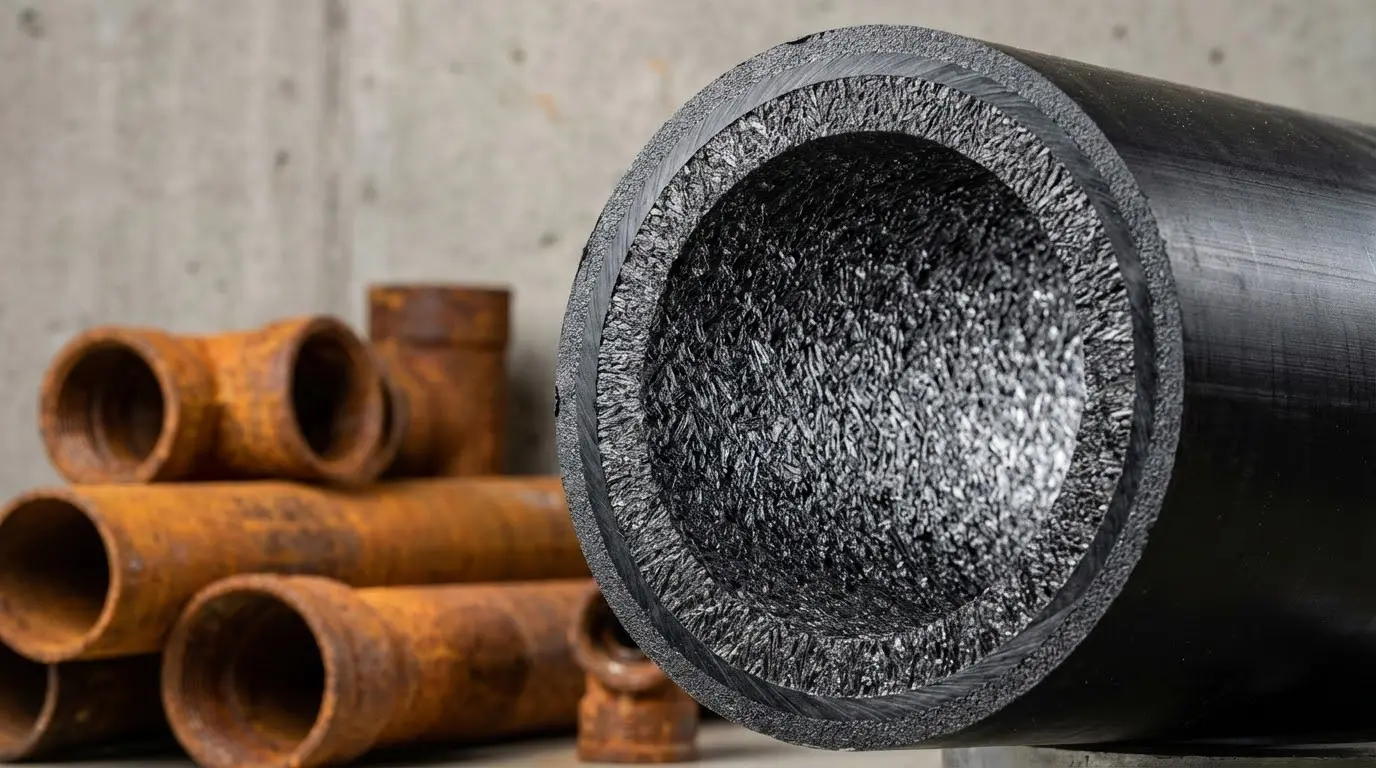
Corrosion is the arch-enemy of metal piping. HDPE effectively eliminates this risk because it is chemically inert. It doesn't rust, rot, or galvanic corrode. The material ignores biological attacks from bacteria or fungi and remains stable in "hot" soils with low pH (acidic) or high salinity.
This inertness applies equally to the fluid inside. HDPE resists a broad spectrum of water treatment chemicals, including chlorine and chloramines (within standard operating parameters), as well as industrial effluents. It acts as a safe, non-reactive conduit that preserves water quality without degrading the pipe wall.
Application Scope: From Mining to Agriculture
Because it is chemically robust, HDPE is the standard for sectors far tougher than potable water:
- Mining Operations: Handling abrasive slurries and acidic leachates that eat steel.
- Agriculture: Transporting water mixed with aggressive fertilizers and pesticides.
- Industrial Wastewater: Conveying effluent loaded with chemical byproducts.
- Desalination: Withstanding the corrosive brutality of saltwater intake and brine discharge.
Cost Avoidance: No Cathodic Protection Required
Specifying metal pipes often forces engineers to design expensive mitigation strategies. You have to install complex cathodic protection systems (sacrificial anodes) or apply fragile internal linings like cement mortar.
HDPE renders these costs obsolete. Since the pipe is immune to galvanic corrosion, there is no need for protective coatings or electrical monitoring. This simplifies design, speeds up installation, and eliminates the maintenance burden of checking anodes.
Leak-Free Integrity via Butt Fusion
The Butt Fusion Advantage: Creating a Monolithic System
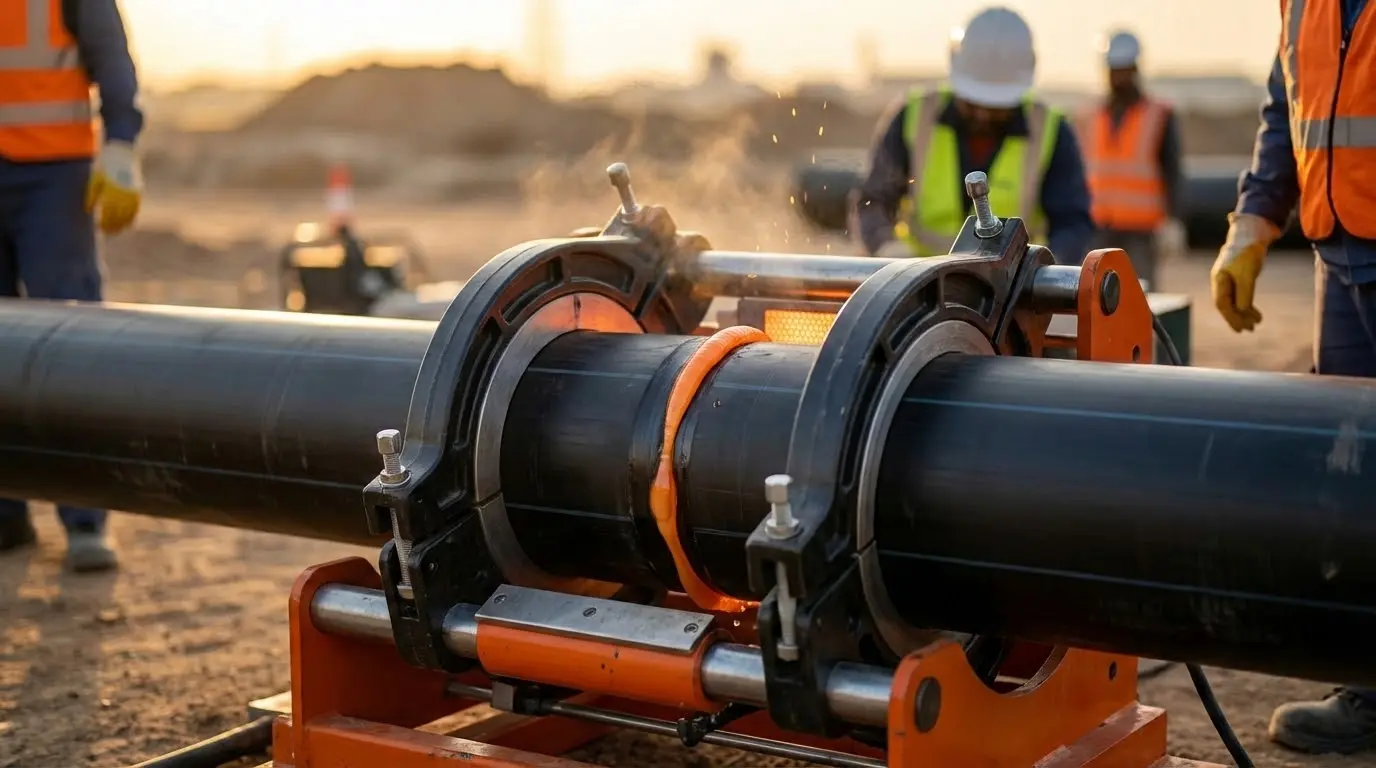
The single greatest technical advantage of an HDPE system is how it connects. Unlike PVC or ductile iron, which rely on gasketed bell-and-spigot joints that can degrade, HDPE pipes are joined via thermal butt fusion. We heat the ends and press them together.
Once cooled, the joint is gone. The two pipes become one continuous, homogeneous tube. In tensile tests, the pipe wall will typically stretch and yield before the fused joint ever fails. We eliminate the "weakest link" found in mechanical connections.
Key Parameters: precision Welding
A perfect weld isn't luck; it's physics. Professional installers and OEM factories monitor these parameters closely:
- Heating Temperature: The plate must hit the exact melting point of the PE resin.
- Heating Time: You need time to build the melt bead. An 8mm wall, for example, needs about 80 seconds of heat soak.
- Cooling Time: This locks in the crystalline structure. Pressure must be held for at least 11 minutes per inch of wall thickness. Rushing this ruins the joint.
Leak Rate: Near-Zero vs. The Norm
Non-Revenue Water (water lost before it reaches the customer) is a global crisis. Traditional flanged or bell-and-spigot joints leak. Gaskets rot, ground shifts, and seals break.
HDPE butt fusion joints offer a near-zero leakage rate. With no gaskets to fail and no mechanical seals to break, the system stays tight. For municipalities, this saves millions of gallons annually and slashes the energy bill for pumping water that never arrives.
Manufacturing Excellence & Quality Control
Advanced Extrusion: Consistency is Key
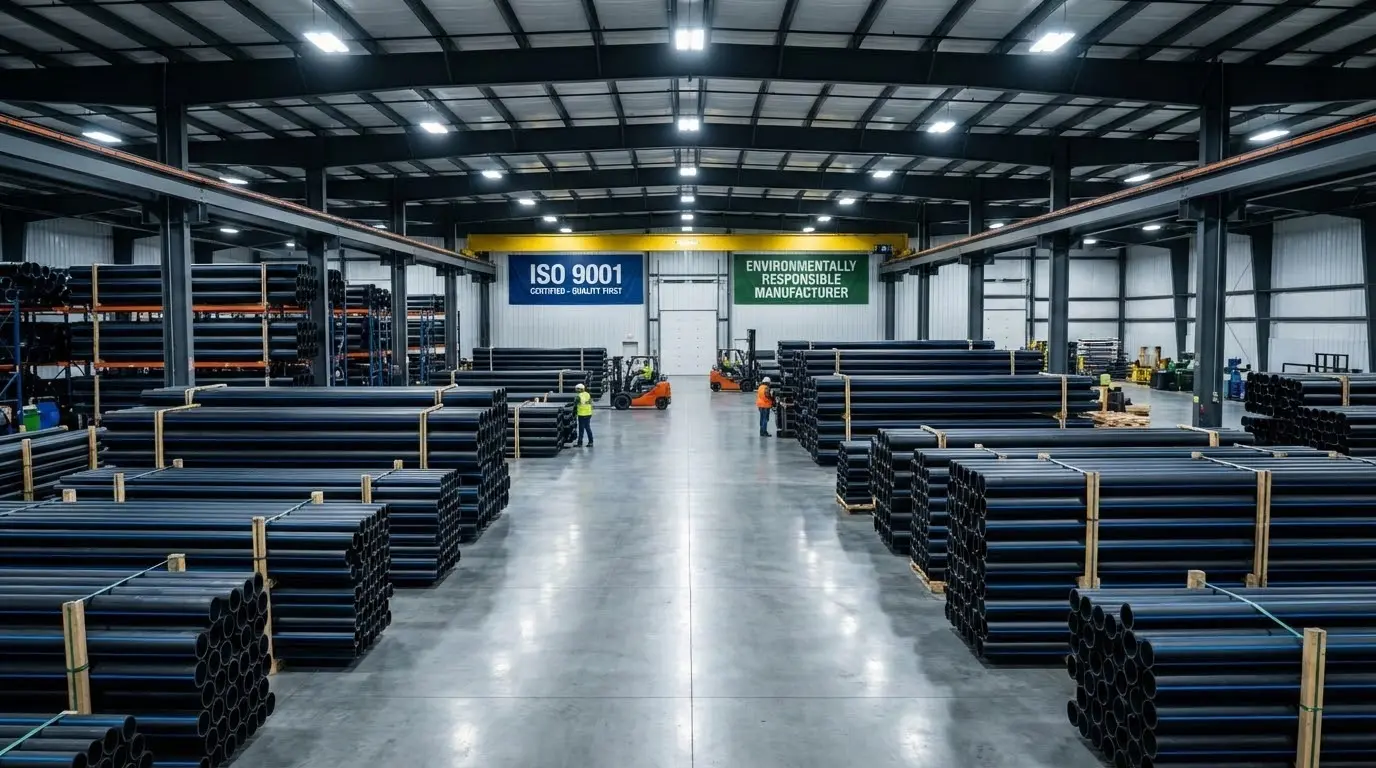
Top-tier HDPE pipe advantages begin on the factory floor. Using advanced extrusion lines, manufacturers ensure raw polyethylene pellets are melted, homogenized, and formed with absolute precision.
Modern lines use gravimetric dosing and ultrasonic scanning to monitor wall thickness and concentricity in real-time. This guarantees every meter meets the SDR (Standard Dimension Ratio) and density specs, eliminating weak spots.
Rigorous Testing: Validating Performance
Reliable OEM/ODM factories don't guess. They prove it via rigorous protocols:
- Hydrostatic Pressure Tests: Pushing pipes beyond their rating to verify safety margins.
- PENT (Pennsylvania Notch Test): A critical measurement of the resin's resistance to Slow Crack Growth (SCG), predicting long-term durability.
- Raw Material Certification: Using only virgin PE100 or PE80 resins, strictly avoiding the contamination risks of low-grade recycled fillers.
Traceability: The ISO Standard
For B2B buyers, traceability is non-negotiable. Compliant HDPE pipes are permanently marked per standards like ISO 4427, EN 12201, or ASTM F714. These markings detail the manufacturer, production date, material grade (e.g., PE100), pressure rating (PN), and SDR. This transparency allows project managers to verify the delivered product matches the engineering specs exactly.
Flexibility & Installation Speed
Trenching Advantages: Bending the Rules
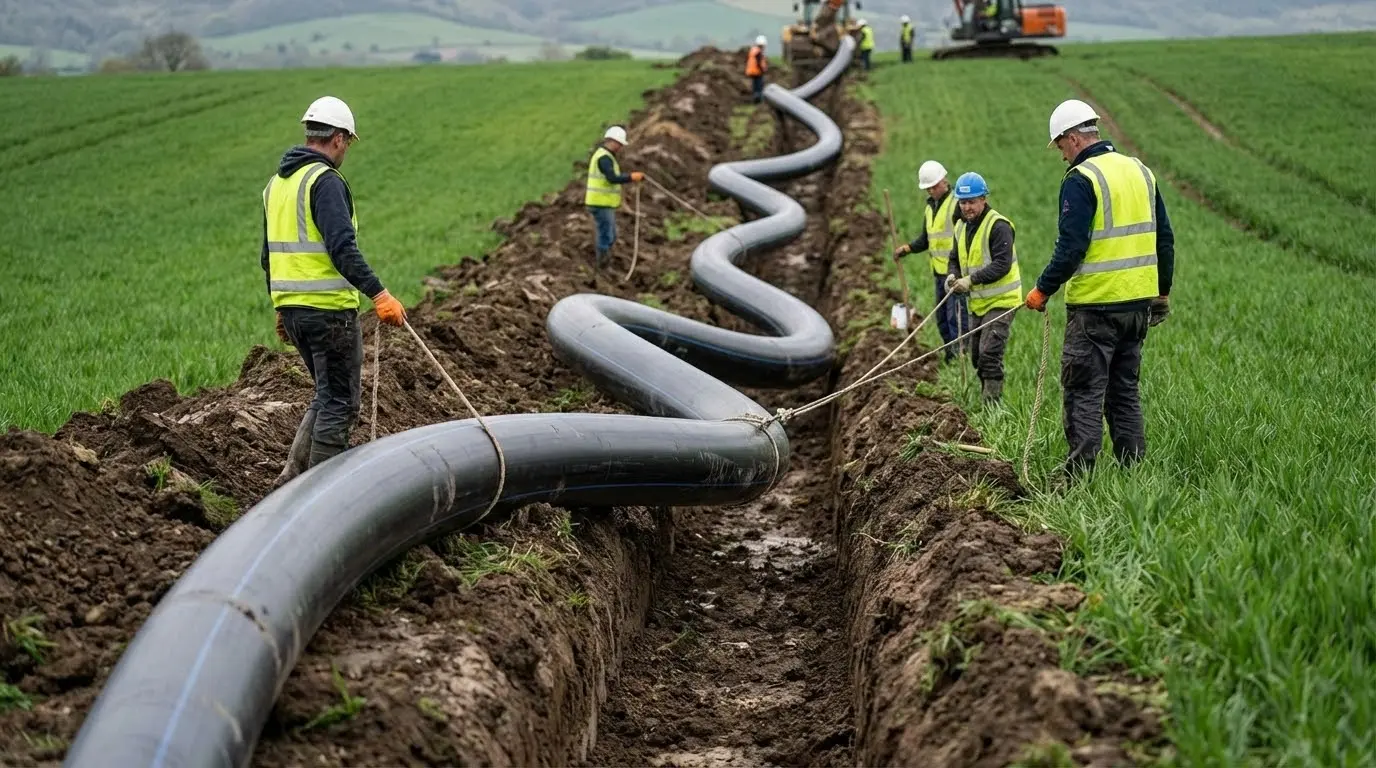
Rigid pipes like steel require perfectly graded trenches and endless directional fittings (elbows) to turn corners. HDPE changes the geometry of installation.
You can bend HDPE to a radius of 20 to 25 times its diameter. This allows the pipeline to snake around underground obstacles or follow the natural curve of the terrain without extra fittings. This cuts material costs and reduces flow restriction caused by sharp 90-degree turns.
Cost-Benefit: Faster, Lighter, Cheaper
HDPE is roughly 1/8th the density of steel. This lightweight nature drastically lowers installation costs.
- Fewer Joints: With lengths up to 12 meters (or coiled reels for smaller diameters), you need fewer welds per kilometer.
- Above-Ground Fusion: Crews can weld the pipe beside the trench and lower it in gradually.
- Less Heavy Iron: You don't need massive cranes for handling, which lowers rental fees and fuel consumption.
Seismic Resilience: Bending Instead of Breaking
In earthquake zones or liquefaction areas, rigid pipes shear. HDPE’s ductility allows it to absorb ground movement, vibration, and shock waves. It moves *with* the earth rather than resisting it. This makes HDPE the default choice for water supply in seismically active regions like Japan, California, and Chile.
Hydraulic Efficiency & Sustainability
Smooth Bore: Keeping Flow High and Costs Low
Hydraulic efficiency depends on friction. HDPE boasts a Hazen-Williams C-Factor of 150, and crucially, this number stays constant over time.
Cast iron pipes might start with a C-Factor of 120, but tuberculation (internal rust buildup) drags that number down quickly. A narrower, rougher pipe forces pumps to work harder. By maintaining a glass-smooth bore, HDPE systems burn less energy moving water, creating operational savings that stack up over decades.
Environmental Impact: The Green Choice
Sustainability is now a procurement requirement. HDPE delivers:
- Lower Carbon Footprint: Manufacturing HDPE generates a CO2 footprint seven times smaller than equivalent metal pipes.
- Recyclability: HDPE is 100% recyclable. At the end of its life, it can be re-processed, supporting the circular economy.
Water Conservation: The Ultimate Green Metric
The most direct environmental benefit is simple: keeping the water in the pipe. By using leak-proof fused joints, HDPE prevents the waste of treated potable water. In an era of scarcity, a zero-loss transport system is perhaps the most vital technical advantage of all.
Frequently Asked Questions
Q1: What is the maximum pressure rating for HDPE water pipes, and how do I select the right PN/SDR class?
Pressure ratings are defined by the PN (Nominal Pressure) class and SDR (Standard Dimension Ratio). The SDR is the ratio of diameter to wall thickness; lower SDR means thicker walls and higher pressure handling.
- Range: Typically PN 3.2 (3.2 bar) to PN 25 (25 bar).
- High Pressure: Small diameters (≤110mm) can be engineered for 50 bar (5MPa) or higher for specialized needs.
- Selection: Calculate your maximum operating pressure *plus* surge pressures (water hammer) to pick the right SDR.
Q2: How does the cost of HDPE compare to ductile iron over a 30-year lifecycle?
Initial costs vary, but the lifecycle cost of HDPE is the winner. Studies show HDPE can have 40-45% lower lifecycle costs than ductile iron over 50 years. The savings come from zero corrosion maintenance, near-zero leak rates, lower pumping energy bills, and deleting cathodic protection from the budget.
Q3: Are there limitations where HDPE is not recommended?
Transparency is key to engineering.
- UV Exposure: Black HDPE uses carbon black to resist UV, but non-stabilized colored pipes shouldn't be stored in direct sun for years.
- Temperature: It’s tough in the cold, but extreme freezing requires careful handling. Conversely, pressure ratings must be de-rated if operating temperatures consistently exceed 20°C.
- Chemicals: While resistant to most, high concentrations of certain hydrocarbons or alcohols under stress can be an issue.
Q4: What certifications (NSF/ANSI 61, ISO 4427) matter for potable water?
For drinking water projects, demand the following from your factory:
- ISO 4427: The international standard for PE water pipes.
- NSF/ANSI 61: Ensures no harmful contaminants leach into the water (Health Effects).
- EN 12201: The European standard.
Always request the Mill Test Certificate (MTC) to verify these specs.
Conclusion
The transition from traditional piping to High-Density Polyethylene isn't just a trend; it’s an industrial evolution driven by hard data. HDPE water pipes bundle critical technical advantages—molecular durability, immunity to corrosion, monolithic joint integrity, and hydraulic efficiency—into a single, future-proof solution.
For B2B buyers, the decision is straightforward: investing in HDPE is investing in a leakage-free, low-maintenance future. By choosing a factory-direct partner capable of delivering OEM/ODM excellence and certified quality, you secure the longevity and profitability of your water infrastructure.
Ready to specify a reliable, cost-effective water supply system? Contact our technical experts today for free samples, customized quotes, and project-specific performance data.