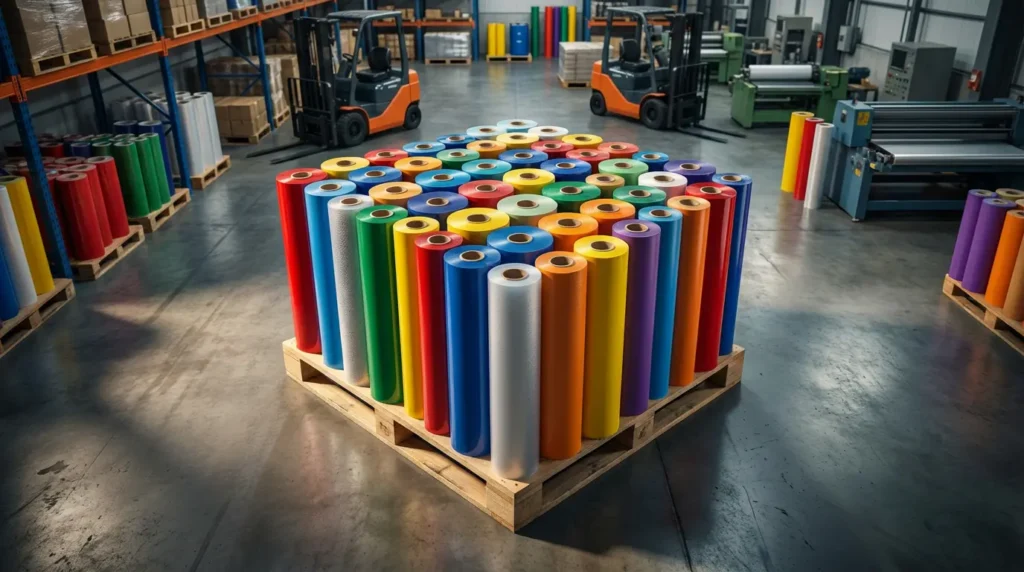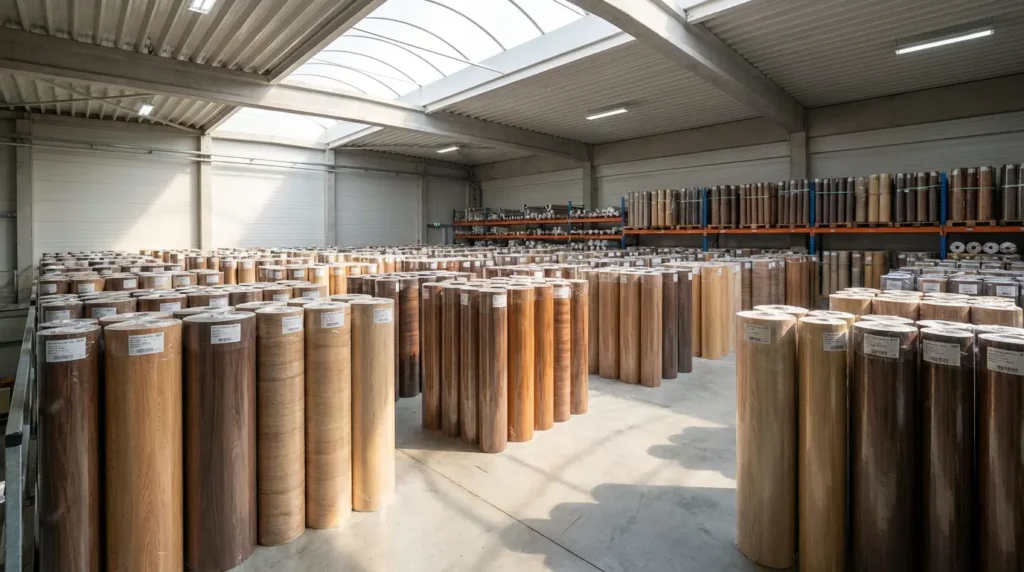
Table of Contents
Global sourcing is a high-stakes game. Finding the right PVC Decorative Film Factory isn't just a box to check—it’s the backbone of your product’s success. The market is flooded with inconsistent material quality and confusing pricing structures that can quickly eat into a wholesaler’s or contractor’s margins. Partner with the wrong manufacturer, and you face the nightmare of materials peeling, fading, or failing safety inspections. That damages more than your project timeline; it damages your reputation.
This guide cuts through the noise. We are going to break down exactly how to vet a supplier, ensuring they meet rigorous technical standards while offering true factory-direct pricing. We will look at the machinery that matters, the specs you can’t ignore, and the quality protocols that separate top-tier manufacturers from the rest.
Here is how to mitigate risk, bypass the middlemen, and secure a supply chain that actually works for you.
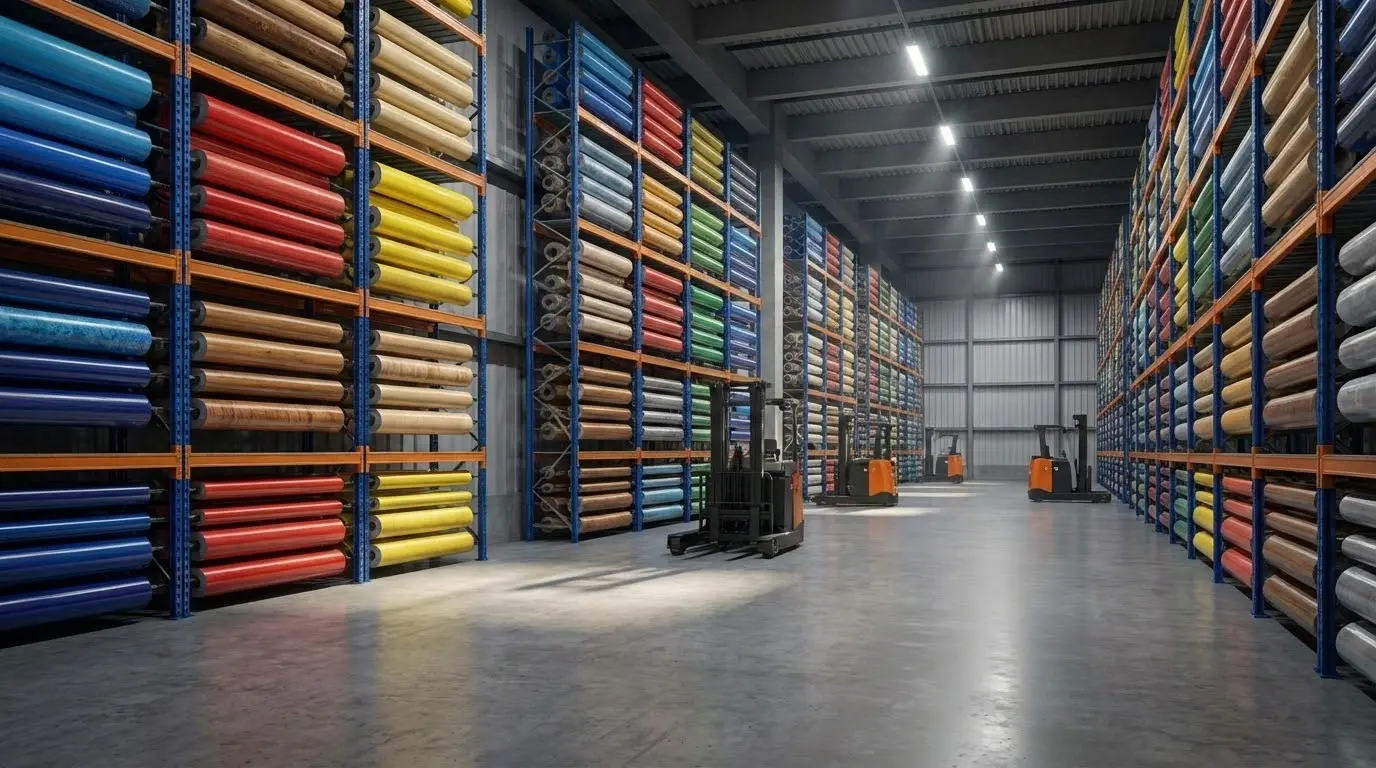
Understanding Your Needs: Product Specifications & Applications
You cannot find the right partner if you don't know exactly what you are asking for. Top-tier factories operate on precision. To get an accurate quote—and a sample that actually works—you need to define your technical requirements upfront.
Defining Film Type, Thickness, and Finish Requirements
PVC is versatile, which means "standard" is a relative term. Be specific. Do you need rigid, semi-rigid, or flexible film? Thickness is the biggest driver of both cost and performance. For standard furniture lamination, the industry sweet spot is usually 0.12mm to 0.18mm. However, if you are surfacing high-traffic areas or heavy-duty commercial fixtures, you need a factory capable of running thicker gauges, typically between 0.45mm and 0.50mm.
Finishes aren't just about looks; they dictate the production environment. Competent factories should offer a robust portfolio:
- Matte: Soft-touch surfaces essential for modern, understated interiors.
- High Gloss: Requires a pristine, dust-free extrusion environment to prevent surface imperfections.
- Wood Grain: Deep embossed textures that rival natural timber.
- Stone Finish: High-fidelity marble or granite patterns.
- Solid Color: High pigmentation for consistent, uniform coverage.
Assessing Application Suitability & Performance Demands
A film engineered for flat lamination might fail miserably in a vacuum membrane press. You must clarify the end-use: furniture lamination, wall panels, interior doors, or ceiling profiles.
Performance metrics are non-negotiable. For industrial durability, verify the film’s mechanical properties. Look for a Tensile Strength of 10-25 MPa and an Elongation at Break of 200-400%. That elasticity is vital for vacuum forming; it allows the film to stretch into deep grooves without whitening or tearing. Additionally, for commercial projects, Fire Retardancy is often mandatory—insist on a Limiting Oxygen Index (LOI) ≥ 40.
Customization Capabilities & Minimum Order Quantities (MOQ)
If you need bespoke designs, you need a partner with a real R&D department, not just a sales team. Can they color-match a physical sample you send them with 95% accuracy? Can they develop custom texture rollers?
Then there is the logistics of volume. PVC Decorative Film wholesales typically rely on bulk movement, but flexible factories often allow lower Minimum Order Quantities (MOQ) for trial runs. Clarify your volume needs immediately to see if you fit into their production planning.
Evaluating Factory Capabilities & Production Technology
The machinery on the factory floor tells you more about quality than the sales brochure. If a factory is running outdated equipment, they simply cannot hold the tight tolerances modern applications require.
Production Line & Equipment: Modernity, Capacity, and Efficiency
Dig into their hardware. The core of PVC film production relies on calendering, gravure printing, and laminating. You want high-precision calendering machines that guarantee uniform thickness across the entire roll width. This consistency is critical for your own automated lamination lines.
Ask about their printing tech. Modern multi-color gravure presses are necessary for high-definition wood grains that don't look pixelated or blurry. Also, check their capacity. A facility with multiple extrusion lines can absorb demand spikes, maintaining a standard lead time of 2-4 weeks even for custom bulk orders. You don't want your supply chain to bottleneck because your supplier only has one working line.
Raw Material Sourcing & Quality Control Protocols
Great film requires great ingredients. Ask specifically about the origin of their PVC resins, plasticizers, pigments, and stabilizers. The best factories use virgin PVC resins. Factories that rely heavily on recycled materials introduce impurities that ruin color consistency and durability.
Ask about their intake procedures. Do they test the purity of incoming plasticizers? Do they have contracts with established chemical suppliers? These details predict whether the film will last ten years or start degrading in ten months.
Manufacturing Processes & Adhesion Technology
Understanding how the sausage is made helps you troubleshoot later. For example, registered embossing—where the texture perfectly matches the visual grain—requires the embossing process to be perfectly synchronized with printing.
Most importantly, grill them on adhesion. Whether they use PU, epoxy, or hot melt depends on the product line, but the bond strength must be absolute. Poor adhesion causes delamination, which is a catastrophic failure in the field. A factory that understands the chemistry of primers and back-coatings will deliver a product that locks onto MDF, plywood, or WPC substrates permanently.
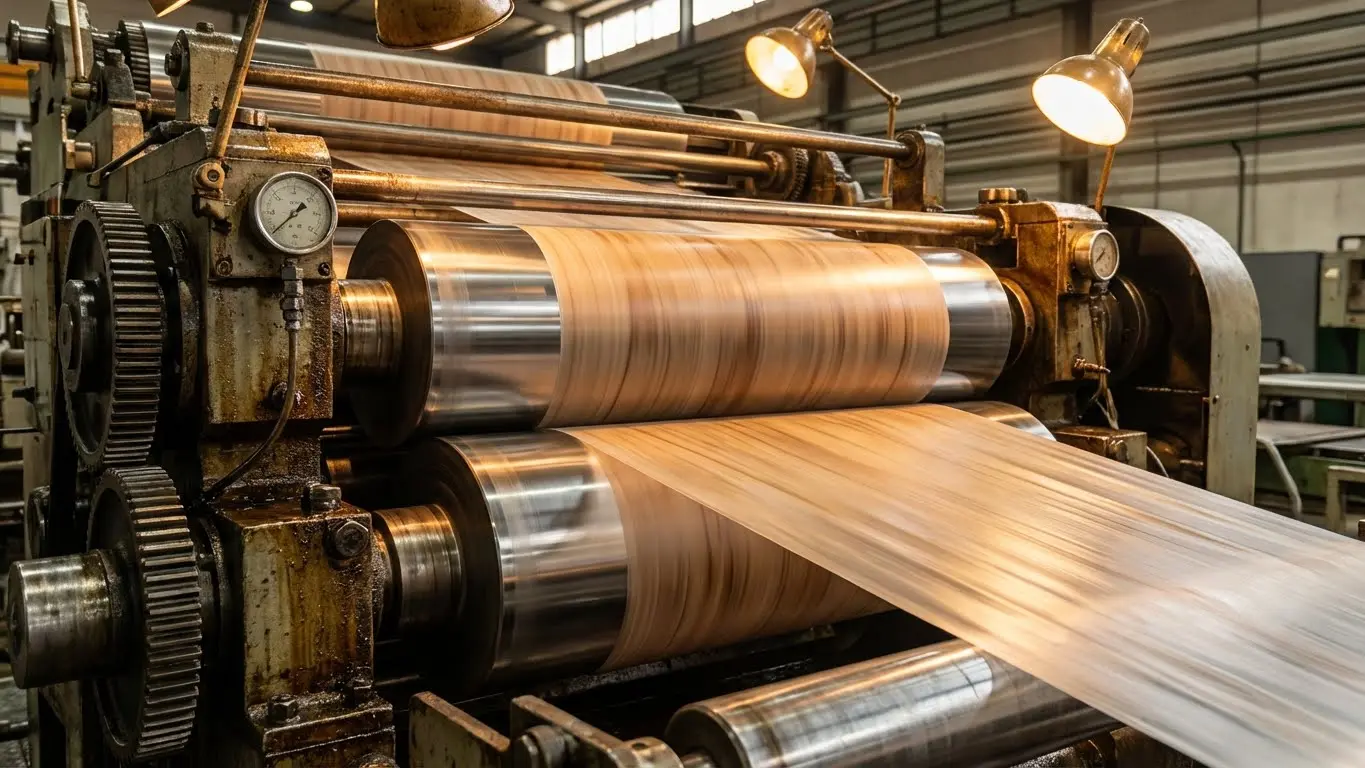
Quality Assurance & Certifications: A Mark of Reliability
In B2B, trust is good, but verifiable data is better. A serious PVC Decorative Film Factory will have third-party validation for both their management systems and their products.
International Standards & Certifications Compliance
Start with ISO 9001. This isn't just a badge; it proves they have a standardized process for everything from raw material intake to shipping.
If you are importing into strict markets like Europe or North America, safety compliance is mandatory. Ensure the films meet:
- REACH: Confirms no harmful chemicals of very high concern are used.
- RoHS: Restriction of Hazardous Substances.
- EN 71-3: Safety standards often required for children's furniture and toys.
- ASTM: The American benchmark for testing physical properties.
Internal Quality Control Systems & Testing Protocols
Certificates get you in the door, but daily QC keeps you there. Do they perform in-process checks every hour? Request to see a sample of their internal testing data sheets.
Key tests should cover:
1. Peel Strength: Ensuring layers don't separate.
2. Color Fastness: Resistance to UV fading.
3. Dimensional Stability: Ensuring the film doesn't shrink after application.
4. Impact Resistance: Simulating real-world knocks and scratches.
Sample Evaluation & Performance Validation
Never place a bulk order blind. Request a comprehensive sample kit containing the specific thicknesses and finishes you plan to buy.
Don't just look at them—torture test them. Send samples to a third-party lab or perform your own validation. Test scratch resistance and see how the film reacts to common household cleaners. A factory confident in its product will be happy to provide samples for independent evaluation.

Pricing Structure & Cost-Effectiveness: Beyond the Unit Price
Everyone wants a low price, but the lowest bid often carries the highest risk. Smart buyers look at the total value proposition.
Direct Pricing Advantages vs. Distributor Margins
Buying directly from a PVC Decorative Film Factory allows you to bypass the markups added by trading companies and local distributors. These intermediaries often tack on 20-40%. Going direct gives you access to factory-gate pricing, which you can use to pad your margins or offer more competitive bids to your own clients.
Direct access also means you are negotiating based on real production costs. If you can tweak a specification to optimize their production run, a factory can often pass those savings back to you.
Total Cost of Ownership (TCO) Analysis
When you get a quote, look beyond the price per meter. Calculate the Total Cost of Ownership (TCO). This includes:
- Unit Price: The base cost.
- Shipping Terms: Know the difference between FOB (Free on Board) and CIF (Cost, Insurance, and Freight). FOB gives you control over freight and insurance (often cheaper if you have good logistics partners), while CIF transfers that responsibility to the seller but may include premiums.
- Customs & Duties: Factor in your country's import tariffs on PVC.
- Hidden Charges: Ask about pallet fees, packaging costs, and banking fees upfront.
Payment Terms, Volume Discounts, and Long-Term Partnership Benefits
Factories prefer consistent volume over one-off, high-margin deals. Use this to your advantage. Negotiate volume-based discounts—for instance, a 15% price break for orders exceeding 10,000 meters.
Discuss payment structures. While initial orders usually require a deposit (often 30%) with the balance due before shipment, a proven track record can unlock better terms, such as Letters of Credit (L/C) or credit terms. Long-term partners also get priority scheduling during peak seasons, which is invaluable when deadlines are tight.
Supplier Reputation, Communication & Logistics
A factory's "soft skills"—communication and service—are just as critical as their hardware. A supplier who makes great film but goes silent during a delay is a liability.
Client References & Market Reputation Assessment
Do your due diligence. Ask for client references, preferably from your region. They might not name direct competitors, but they should provide contacts in related industries. Check their presence at major trade shows and their digital footprint. Longevity in the PVC Decorative Film wholesales market is usually a strong indicator of reliability.
Communication Efficiency & Technical Support
Test their responsiveness during the inquiry phase. Do they reply within 24 hours? Is their English fluent? Do they answer technical questions directly, or do they dodge them?
Technical support is vital. If you encounter bubbling during lamination, you need a factory that can analyze the problem and offer solutions—whether that means adjusting machine temperature or changing adhesive types—rather than just blaming your equipment.
Logistics & Export Experience for Global Shipments
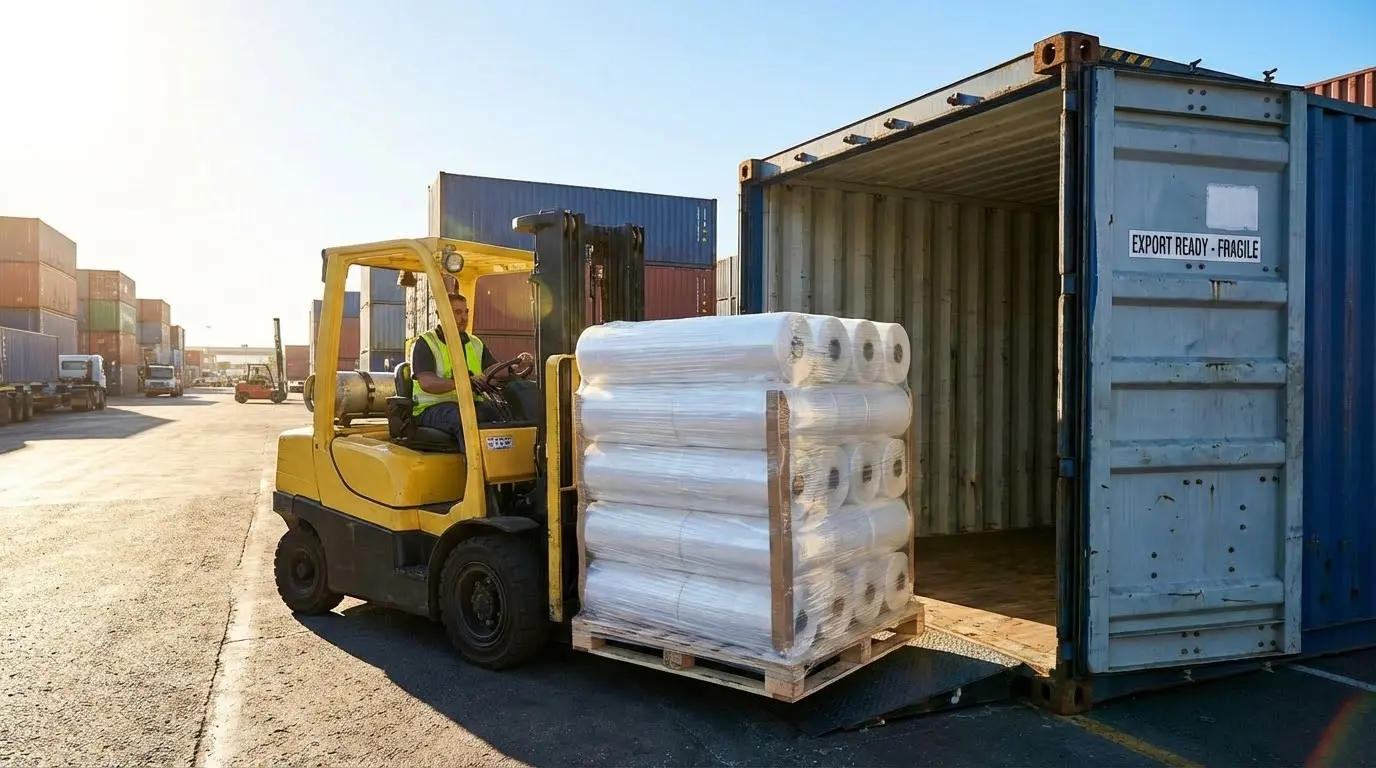
Exporting PVC film is an art. The rolls are heavy and sensitive to pressure. Confirm the factory’s packaging standards:
- Are rolls suspended in the box to prevent pressure marks (flat spots)?
- Are desiccants included to prevent moisture damage?
- Do they use sturdy, export-grade pallets?
Experienced exporters handle customs documentation (Commercial Invoice, Packing List, Bill of Lading, Certificate of Origin) flawlessly, ensuring your goods clear customs without expensive delays.
Frequently Asked Questions
Q1: What is the typical lead time for a bulk order of custom PVC decorative film?
For standard designs already in the cylinder library, production is fast. However, for custom bulk orders, plan for a lead time of 2 to 4 weeks. This covers raw material procurement, production scheduling, and rigorous quality testing. Always factor in ocean freight time when planning inventory.
Q2: How can I verify the environmental compliance and safety of the PVC decorative film materials?
Ask for current REACH and RoHS certificates directly from the factory. A reputable PVC Decorative Film Factory will provide test reports from accredited third-party labs (like SGS or Intertek) dated within the last 12 months. These confirm the material is free from heavy metals and restricted phthalates.
Q3: Are there specific storage and handling instructions for PVC decorative film?
Yes. Store PVC film in a cool, dry place away from direct sunlight and heat to prevent premature aging or plasticizer migration. The ideal temperature range is 18°C to 25°C. Rolls should be stored horizontally or suspended to prevent pressure marks and deformation.
Q4: What causes PVC film delamination, and how can a factory prevent it?
Delamination usually stems from poor adhesive quality, insufficient hot pressing time, excessive heat, or trapped moisture. A quality-focused factory prevents this by using high-grade primers, strictly controlling surface tension during calendering to ensure ink and adhesive bonding, and maintaining a humidity-controlled production environment.
Conclusion
Selecting the right PVC Decorative Film Factory is a strategic decision that ripples through your entire business. It impacts product quality, project costs, and your ability to sleep at night. It requires moving beyond simple price comparisons to a holistic evaluation of technical capabilities, quality assurance, and logistical competence.
By systematically vetting factories against your specific needs—checking tensile strength, verifying ISO/REACH compliance, and analyzing the Total Cost of Ownership—you can secure a partnership that delivers consistent excellence. Direct sourcing offers massive advantages, but only when you use the rigorous framework outlined above.
Ready to elevate your projects with premium PVC decorative film from a trusted manufacturer?
Don’t leave quality to chance. Contact us today for a detailed consultation, free product samples, and a competitive, factory-direct quote tailored to your specific requirements. Let’s build a supply chain that drives your business forward.