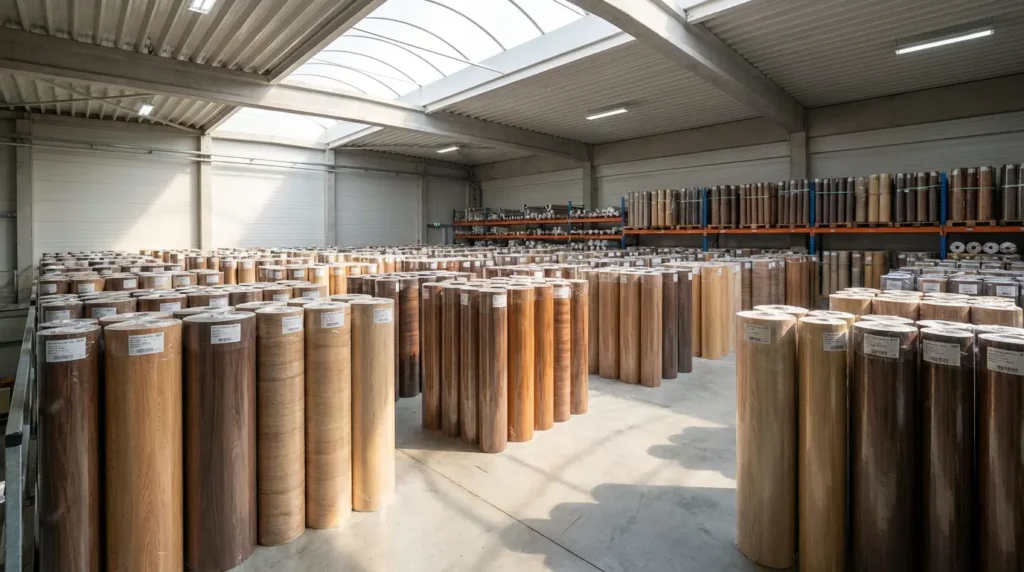
Sourcing the right PVC film involves far more than just picking a thickness or a color. For B2B buyers, engineers, and project managers, the sheer variety of grades can be a minefield. A misstep here doesn’t just mean a material mismatch; it leads to production downtime, compliance failures, and ballooning costs. Whether you are engineering sterile medical packaging or durable construction barriers, the wrong film specification can compromise the integrity of your entire product.
This guide cuts through the noise. We break down the specific types of PVC film, how they are manufactured, and exactly where they fit in the industrial landscape. By the end, you will have the technical insight needed to optimize performance, ensure regulatory compliance, and secure the ideal material for your application.
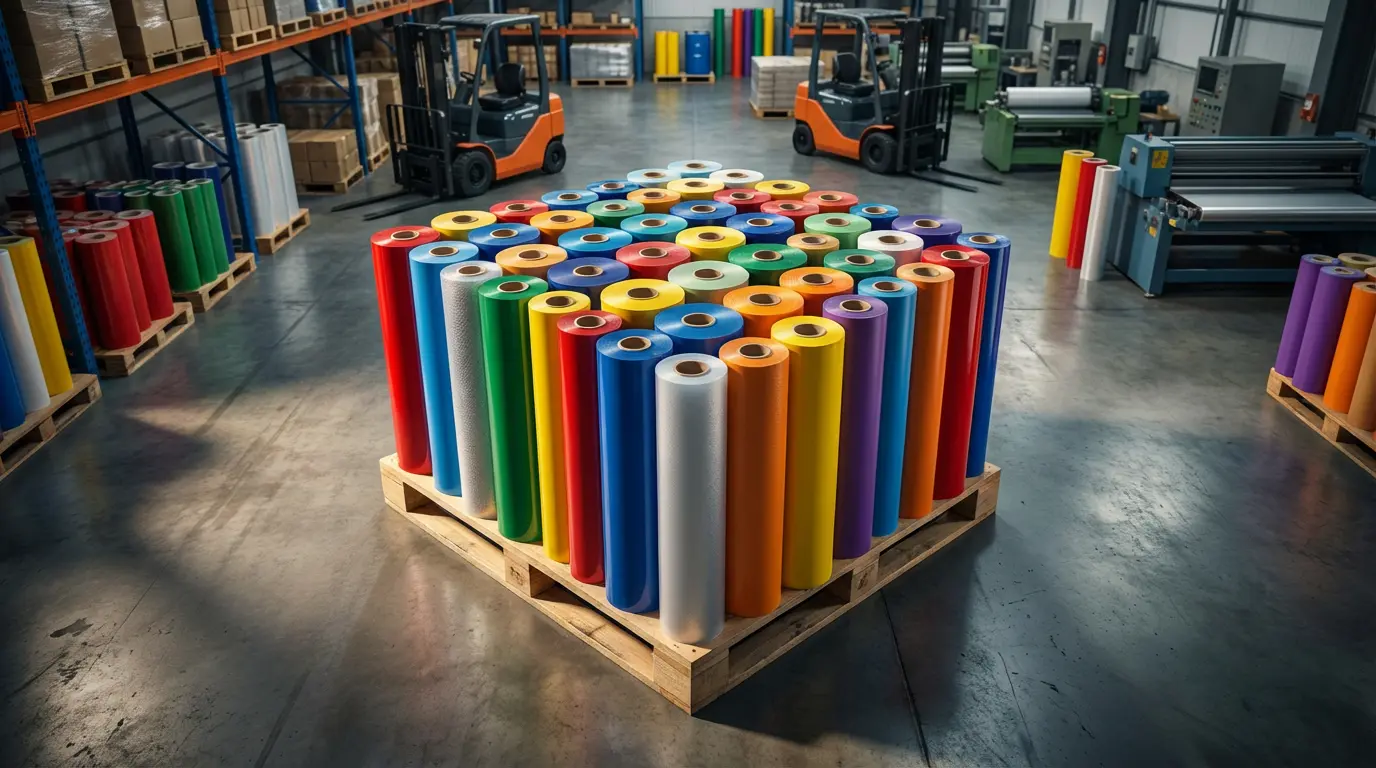
The Core Chemistry and Versatility of PVC Film
Chemical Composition and Polymerization
At its heart, Polyvinyl Chloride (PVC) is a robust thermoplastic born from the polymerization of vinyl chloride monomers. It’s a chemical chameleon; the base resin is compounded with specific additives that dictate its final personality. This molecular adaptability allows manufacturers to engineer films that range from rigid, glass-like sheets to soft membranes that feel like rubber. It is this fundamental versatility that makes PVC a staple across distinct industries.
Inherent Advantages of PVC Film
PVC film holds its ground in global manufacturing because it hits the sweet spot between high performance and cost-efficiency. Its technical resume includes:
- Density & Substance: With a specific gravity between 1.3 and 1.7, PVC is denser than many alternatives. This gives the final product a feeling of quality and durability that lighter plastics often lack.
- Safety First: It is inherently flame retardant. With a Limiting Oxygen Index (LOI) of ≥ 40, PVC self-extinguishes when the flame source is removed—a non-negotiable trait for electrical and building codes.
- Chemical Armor: The material resists degradation from acids, alkalis, and oils, ensuring it survives in aggressive industrial settings.
- Thermal Stability: It maintains structural integrity up to a softening point of 80-85°C, handling standard operating temperatures with ease.
Flexible PVC Films: Adaptability and Key Applications
Calendered vs. Extruded Manufacturing
Flexible PVC films generally come from two distinct process lines: calendering and extrusion. Calendering is the heavy hitter for uniformity; it passes heated PVC melt through a series of precision rollers. This is the go-to method for wide sheets used in flooring or upholstery. Extrusion, on the other hand, forces the melt through a die—ideal for thinner gauges or blown films.
While both yield high-quality results, your choice depends on the specs. Flexible films are engineered to perform, typically boasting a Tensile Strength of 10-25 MPa. More impressively, they offer an Elongation at Break of 200-400%, meaning they can stretch to multiple times their length before failing.
The Role of Plasticizers
The secret to this flexibility lies in plasticizers. These additives sit between the polymer chains, increasing free volume and allowing movement. In the B2B world, the type of plasticizer matters just as much as the amount:
- Standard Plasticizers: The workhorses for general-purpose goods like tarps and liners.
- Phthalate-Free Options: These are critical for compliance. If you are manufacturing for the EU (under REACH) or producing medical bags, toys, or food-contact items, non-phthalate plasticizers are mandatory to meet health safety standards.
Critical Performance Metrics
To guarantee these films won’t fail in the field, flexible PVC is subjected to rigorous testing protocols:
- Tear Resistance: We test against ISO 6383-1 (Trouser tear) or ASTM D1922 to ensure the film won’t rip when snagged.
- Cold Crack Resistance: Using ASTM D2136, we determine the lowest temperature the film can handle before snapping. This is vital for outdoor gear used in freezing climates.
- UV Stability: Verified via ASTM D4329, this test uses fluorescent UV lamps to simulate years of sun exposure, ensuring the material doesn’t become brittle.
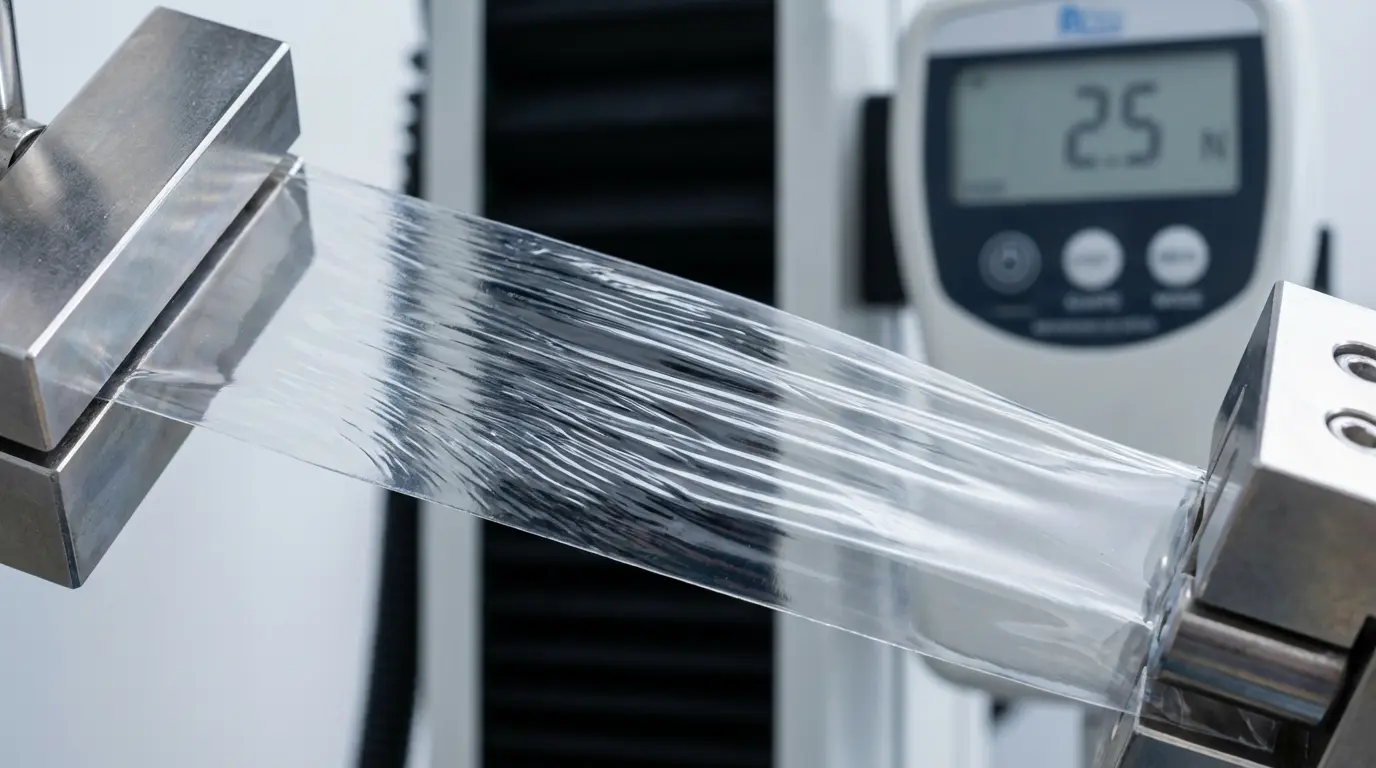
Flexible PVC film undergoing tensile strength testing
Rigid PVC Films: Unyielding Strength for Demanding Uses
Production and Properties of Rigid PVC (RPVC)
Remove the plasticizers, and you get Rigid PVC (RPVC)—a material defined by stiffness and dimensional stability. Manufactured via calendering or flat-die extrusion, RPVC is engineered for structural performance rather than stretch.
- Tensile Strength: It is significantly stronger than its flexible counterpart, averaging around 60 MPa.
- Impact Resistance: With an impact strength of 5–10 kJ/m², it acts as a shield for encased products.
- Thermal Performance: It holds its shape under heat, with a Heat Deflection Temperature (HDT) of 70–71°C (at 1.82 MPa load).
Primary B2B Applications
Because of its excellent barrier properties and rigidity, RPVC is the standard for:
- Pharmaceutical Packaging: It forms the blister packs that keep medication dry and chemically stable.
- Secure ID: Credit cards and smart cards rely on RPVC for printability and lamination strength.
- Construction: Used extensively in window profiles and decorative surface laminates.
- Thermoforming: It is the material of choice for clamshell packaging that protects electronics on retail shelves.
Regulatory Compliance
When dealing with RPVC, compliance is often the biggest hurdle.
- Pharma Standards: Blister packaging must meet FDA 21 CFR and European Pharmacopoeia (EP) standards to ensure zero chemical migration into the drug.
- General Safety: We ensure adherence to REACH (EC 1907/2006), verifying that the rigid film is free from Substances of Very High Concern (SVHC).
Specialty PVC Films: Tailored Solutions for Niche Demands
Advanced Film Formulations
Sometimes, “standard” isn’t enough. We engineer films for extreme environments through specialized compounding:
1. UV-Resistant Film: Chemically stabilized to resist yellowing and cracking, verified by ASTM D4329.
2. Anti-Static Film: Treated to actively dissipate static charges, a requirement for the electronics supply chain.
3. Fire-Retardant Film: Formulated to hit high LOI targets (≥ 40), preventing flame spread in commercial interiors.
Solving Industry-Specific Problems
- Outdoor Signage: Standard vinyl fades. UV-resistant films ensure printed graphics stay vibrant despite years of solar abuse.
- Electronics Packaging: Static electricity can fry a microchip in milliseconds. Anti-static rigid films prevent this Electrostatic Discharge (ESD) during shipping.
- Industrial Safety: Fire-retardant flexible films are the industry standard for welding curtains and warehouse dividers, protecting personnel from sparks and heat.
Additives and Surface Treatments
Achieving these properties requires precise chemistry:
- Impact Modifiers: These are added to rigid films to prevent shattering in cold storage environments.
- Stabilizers: Essential for processing, these prevent the PVC from degrading or burning at extrusion temperatures of ~170°C.
- Surface Treatments: We often apply Corona treatment to increase surface energy, ensuring inks and adhesives bond permanently to the film.
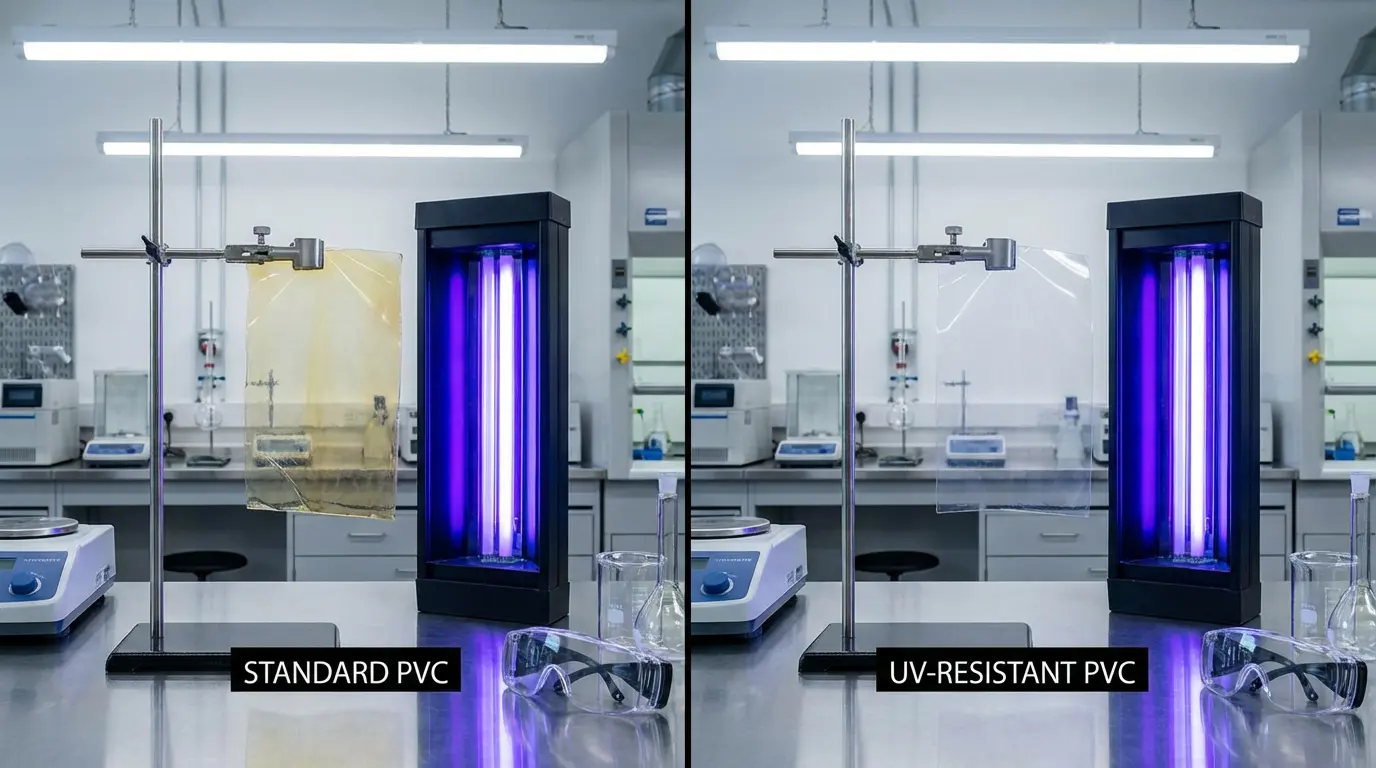
UV resistant PVC film comparison test
Strategic Selection: Matching PVC Film to Your Project Needs
A Framework for Decision Making
Don’t guess. Evaluate your project specs against these three pillars:
1. Flexibility: Do you need the 200-400% elongation of a flexible grade, or the structural armor of RPVC?
2. Thermal Limits: Will your application operate near or above the softening point of 80-85°C?
3. Environment: Does the product face direct sunlight (UV needs) or sub-zero temperatures (Cold Crack resistance)?
Navigating Certifications
In the global market, documentation is everything.
- RoHS Directive: This certifies the film is free from hazardous heavy metals like Lead, Mercury, Cadmium, and Hexavalent Chromium.
- REACH: A critical passport for the European Union, verifying the chemical safety of the entire supply chain.
PVC vs. Alternative Materials
Why choose PVC over something like EVA (Ethylene Vinyl Acetate)?
- Perceived Quality: PVC is denser (1.3 g/cm³) than EVA (0.923 g/cm³). In consumer goods, that extra weight often translates to a “premium” feel.
- Cost-Benefit: Compared to engineering plastics like Polycarbonate or PET, PVC usually offers a more favorable balance of mechanical strength per dollar.
Manufacturing Excellence & Quality Control: Our Commitment to Performance
Our Manufacturing Process
We don’t just run machines; we engineer solutions. Our facility operates state-of-the-art production lines, utilizing precision calendering for exacting gauge control and multi-layer co-extrusion for complex composite films. We also employ advanced surface treatment technologies to guarantee optimal printability and lamination adhesion.
Rigorous Internal Testing
Quality isn’t an afterthought—it’s baked into the process. Every batch undergoes strict internal validation:
- Dimensional Stability: Laser-gauged thickness monitoring.
- Mechanical Integrity: Tensile strength verification (Flexible: 10-25 MPa; Rigid: ~60 MPa) and tear resistance checks.
- Chemical Analysis: Ensuring full compliance with RoHS limits for heavy metals.
Custom Formulation Capabilities
One size rarely fits all. We offer comprehensive OEM/ODM services. Whether you need a precise Pantone color match, a specific matte finish, or a custom formulation to hit a unique Shore hardness, our R&D team can prototype and scale your solution seamlessly.
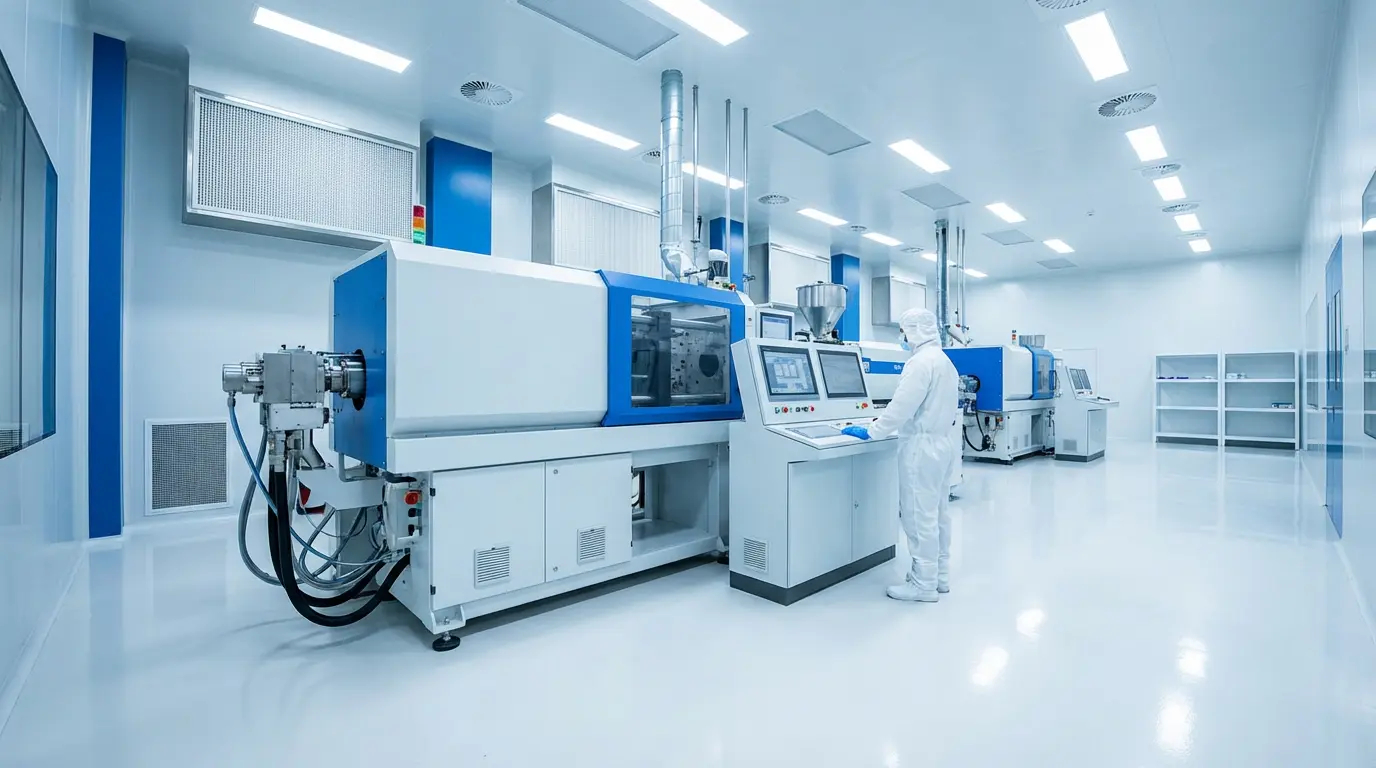
Industrial PVC film extrusion production line
Frequently Asked Questions
Q1: What is the main difference between flexible and rigid PVC film regarding applications?
It comes down to plasticizers. Rigid PVC (RPVC) is strong (~60 MPa) and stiff, making it perfect for structural uses like blister packaging and smart cards. Flexible PVC contains plasticizers that allow for high elongation (200-400%), making it the right choice for soft goods like medical bags, curtains, and inflatables.
Q2: Is PVC film recyclable? What about sustainability?
Yes, PVC films are recyclable. They can undergo mechanical recycling (grinding and remelting) or feedstock recycling. Furthermore, we provide formulations that are fully compliant with RoHS and REACH, ensuring your procurement aligns with modern environmental safety standards.
Q3: How do I determine the right thickness and width for my project?
You need to balance mechanical load against cost. Thicker films provide higher impact strength (crucial for rigid applications), while thinner films reduce material usage. You must also consider your processing equipment—such as the draw depth in thermoforming—to ensure the film doesn’t thin out too much during shaping.
Q4: What are the typical lead times and MOQs for custom orders?
This depends on the complexity of your “recipe.” Standard clear films have lower Minimum Order Quantities (MOQs) and move fast. Custom colors, UV packages, or specific embossments require R&D matching and machine setup, which typically extends the lead time slightly.
Conclusion
From the molecular chemistry to the final application, selecting the right PVC film is a pivot point for project success. Understanding the nuances between flexible, rigid, and specialty films empowers you to make decisions that drive efficiency and performance.
Don’t let material uncertainty stall your production. Leverage our 15 years of industrial manufacturing expertise to lock in the perfect specification. Contact us today for a free consultation, custom sample requests, or to discuss your specific engineering requirements. Let’s build something durable together.