llouts. The market is hungry for surfacing solutions that are durable, budget-friendly, and aesthetically versatile. Yet, pinning down a reliable Wood PVC Film Supply that delivers genuine customization is often harder than it should be.
Enter Wood PVC Film. This isn’t just a substitute; it is a revolutionary material that delivers superior performance, stunning visuals, and customization options that natural wood simply cannot match. Sourced directly from the factory, it offers a smart, engineered alternative capable of meeting the rigorous demands of modern industrial and architectural applications.
In this guide, we will break down the core benefits, explore diverse applications, and highlight critical quality metrics of Wood PVC Film. You will discover how to leverage OEM and custom pattern options to elevate your projects, ensuring your procurement decisions lead to high-quality, factory-direct results.
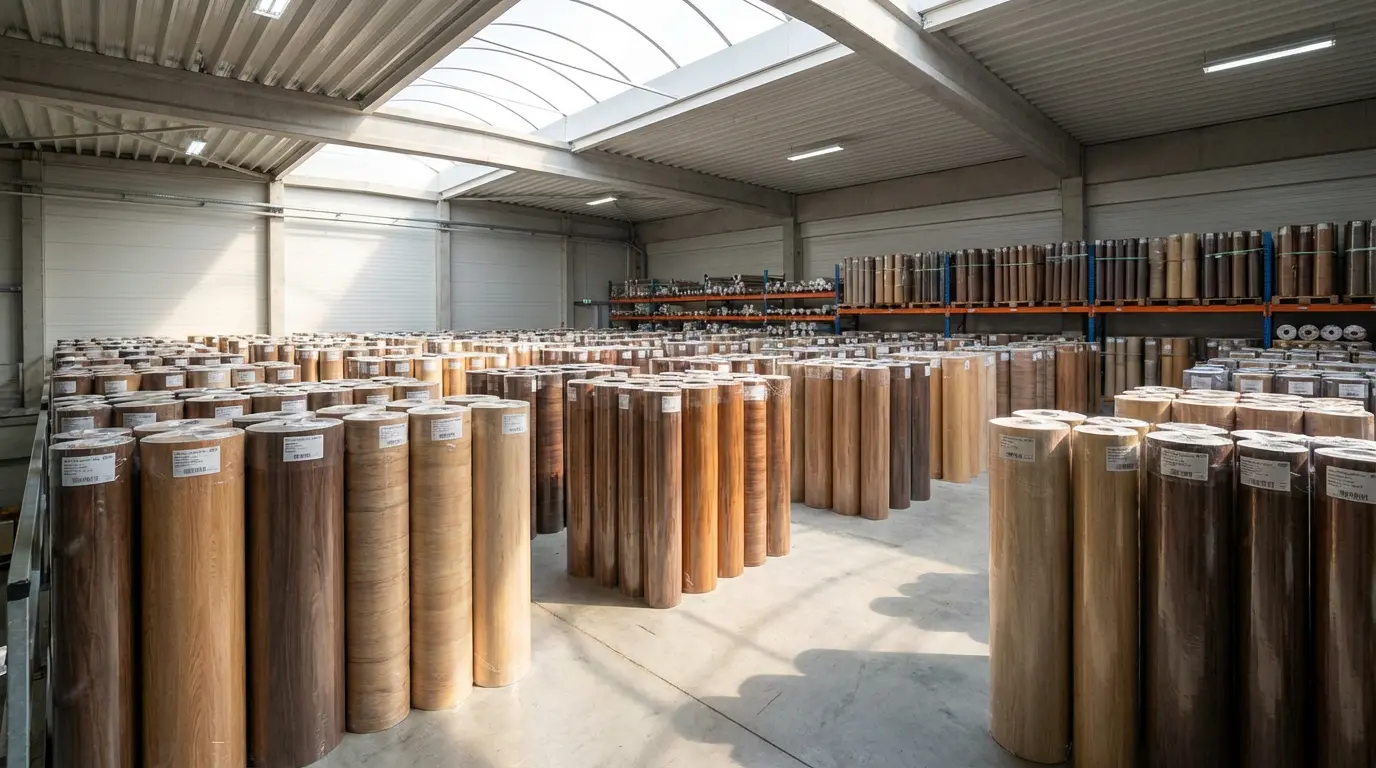
Table of Contents
Understanding Wood PVC Film: The Modern Alternative for Industrial Applications
Composition and Manufacturing Principles
Wood PVC (Polyvinyl Chloride) film is a semi-rigid or rigid decorative sheet engineered specifically for surface lamination. Don’t mistake this for a simple printed plastic sheet; it is a sophisticated, multi-layer composite built for industrial endurance. The structure typically relies on a base PVC layer for strong substrate adhesion, a printed layer using high-definition rotogravure cylinders to replicate wood grain, and a transparent wear layer for robust surface protection.
The manufacturing process utilizes high-precision calendering technology. Here, the raw PVC mixture passes through heated rollers to achieve absolute uniformity in thickness and smoothness. According to technical specifications, the relative density of high-quality industrial PVC film sits between 1.3 and 1.7 g/cm³. This density creates a solid, non-porous barrier that effectively masks substrate imperfections—like particleboard roughness or MDF fibers—resulting in a flawless finish every time.
Comparing Performance: PVC Film vs. Natural Wood
Reliability is the cornerstone of large-scale B2B projects. While natural wood veneers offer a classic look, they are prone to humidity issues, pest infestation, and impact damage. Wood PVC Film, conversely, provides a robust, engineered solution.
- Moisture Resistance: Wood swells and warps; PVC film does not. It is inherently hydrophobic, creating a waterproof seal over the substrate. This makes it the go-to choice for high-humidity environments like kitchens and bathrooms.
- Pest Resistance: Being an inorganic material, PVC is immune to termites, beetles, and other wood-boring pests that frequently disrupt traditional timber supply chains.
- Thermal Stability: With a softening temperature range of 80 – 85°C, the film maintains its structural integrity under standard environmental heat. In comparison, wood veneers often crack or delaminate as they expand and contract with temperature shifts.
Environmental Benefits and Sustainability
Sustainability isn’t just a buzzword; it’s a manufacturing imperative. While PVC is a synthetic polymer, using it as a wood alternative actively aids environmental conservation by curbing the demand for logging natural forests. By switching to Wood PVC Film, manufacturers reduce the pressure on slow-growing hardwood species.
Moreover, our factory processes are tightly aligned with global sustainability goals. The material is recyclable, allowing post-industrial waste to be reprocessed. We strictly adhere to RoHS (Restriction of Hazardous Substances) compliance and REACH standards, guaranteeing our films are free from heavy metals like lead and cadmium. This commitment minimizes environmental impact and ensures safety for both residential and commercial interiors.
Types and Finishes for Industrial Use
To satisfy the varied tastes of global markets, Wood PVC Film comes in a wide spectrum of finishes. The versatility of the calendering and embossing process allows for:
- Matte Finishes: Low-gloss surfaces that resist fingerprints and offer a modern, understated aesthetic.
- High-Gloss: Reflective surfaces frequently favored for contemporary cabinetry.
- Embossed Textures: Physical depth impressed into the film (such as deep wood pores or saw marks) that synchronizes with the printed grain for tactile realism.
- Soft-Touch: Specialized coatings that impart a velvet-like feel, instantly increasing the perceived value of the finished furniture.
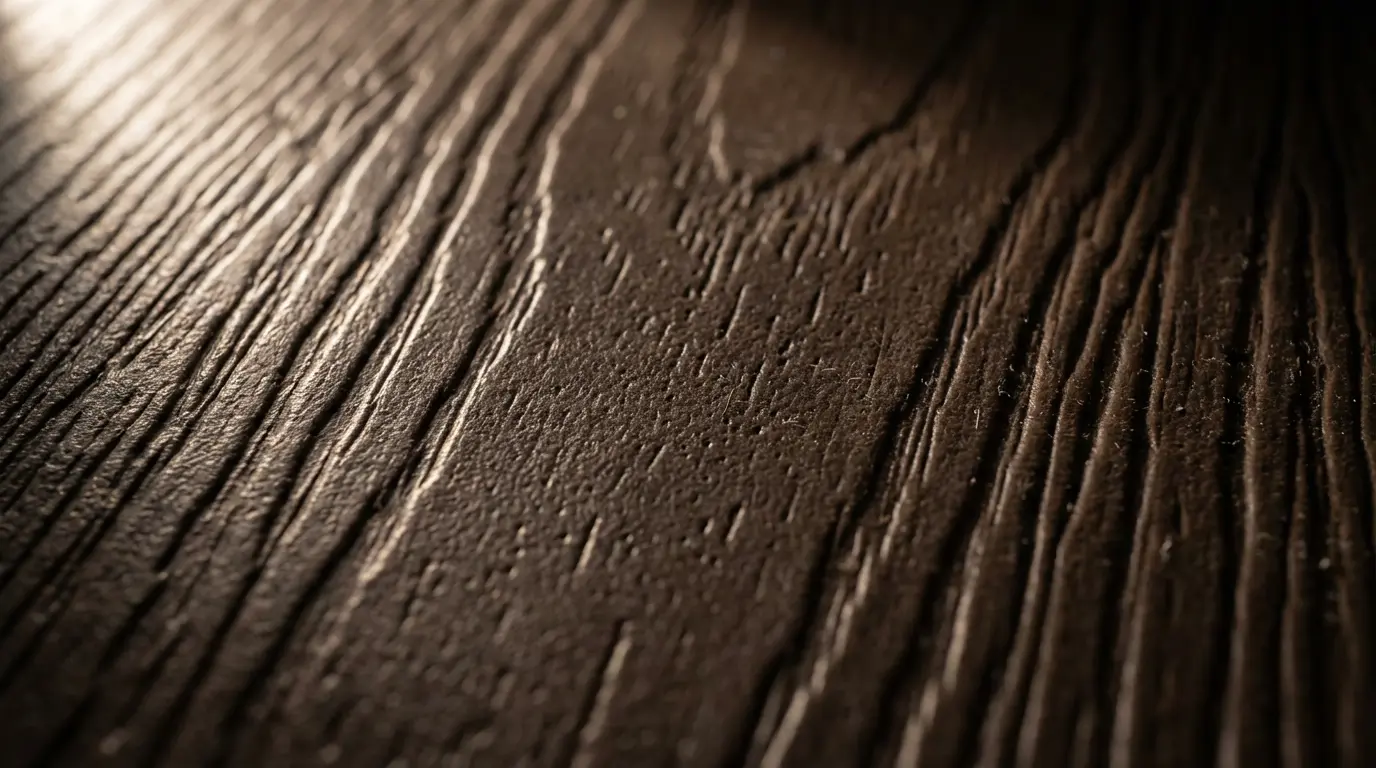
Embossed texture detail of Wood PVC Film
Key Benefits of Wood PVC Film for B2B Projects and Procurement
Long-Term Cost-Effectiveness
For contractors and wholesalers, margins matter. Wood PVC Film offers a massive economic advantage over traditional materials. Market data suggests an indicative price range of approximately $0.08 – $0.50 per meter, depending on thickness and customization level. That is a fraction of the cost of real wood veneer or high-pressure laminates (HPL).
But the savings go beyond the initial purchase. Upon installation, the material requires no sanding, staining, or sealing, which drastically cuts labor costs. Its durability translates to fewer replacements and repairs over the project’s lifespan. For facility managers, the “wipe-clean” maintenance of PVC film means lower operational costs compared to the specialized care natural wood demands.
Superior Performance Advantages
Industrial applications require materials that can take a beating. Wood PVC Film is engineered with specific mechanical properties to ensure it lasts:
- Tensile Strength: With a rating of 10 – 25 MPa, the film resists tearing during both the lamination process and everyday use.
- Elongation at Break: The material boasts an elongation rate of 200 – 400%. This high elasticity is critical for membrane pressing and vacuum forming, allowing the film to stretch into deep grooves and over complex curves without snapping or whitening.
- Flame Retardancy: Safety is non-negotiable. Our PVC film features an Oxygen Index of ≥40, meaning it is self-extinguishing and will not support combustion under normal atmospheric conditions—a crucial feature for commercial building codes.
Design Flexibility and Aesthetic Versatility
Architects love Wood PVC Film for one main reason: freedom. Advanced printing technology allows us to replicate rare and exotic wood species—think Ebony, Zebrawood, or Teak—that are otherwise too expensive or ecologically irresponsible to harvest.
For branding, consistency is key. We offer precise color matching. Whether you are outfitting a global hotel chain or a retail franchise, we ensure the “Walnut” finish in a Tokyo branch matches the one in New York perfectly. This level of consistency is virtually impossible to achieve with natural wood batches, which naturally vary by tree and harvest season.
Ease of Processing and Installation
Time is money on the factory floor. Wood PVC Film is compatible with standard industrial adhesives, including solvent-based, water-based, and hot melt options. Its uniform thickness and consistent Heat Deflection Temperature (70 – 71°C under 1.82 MPa load) make it predictable and easy to process.
The film is optimized for various manufacturing methods:
- Flat Lamination: Ideal for panels and doors.
- Profile Wrapping: Perfect for moldings, skirtings, and window frames.
- Vacuum Membrane Pressing: Essential for 3D surfaces like routed cabinet doors.
- Cutting Efficiency: The film cuts cleanly without chipping, minimizing waste and ensuring crisp edges.
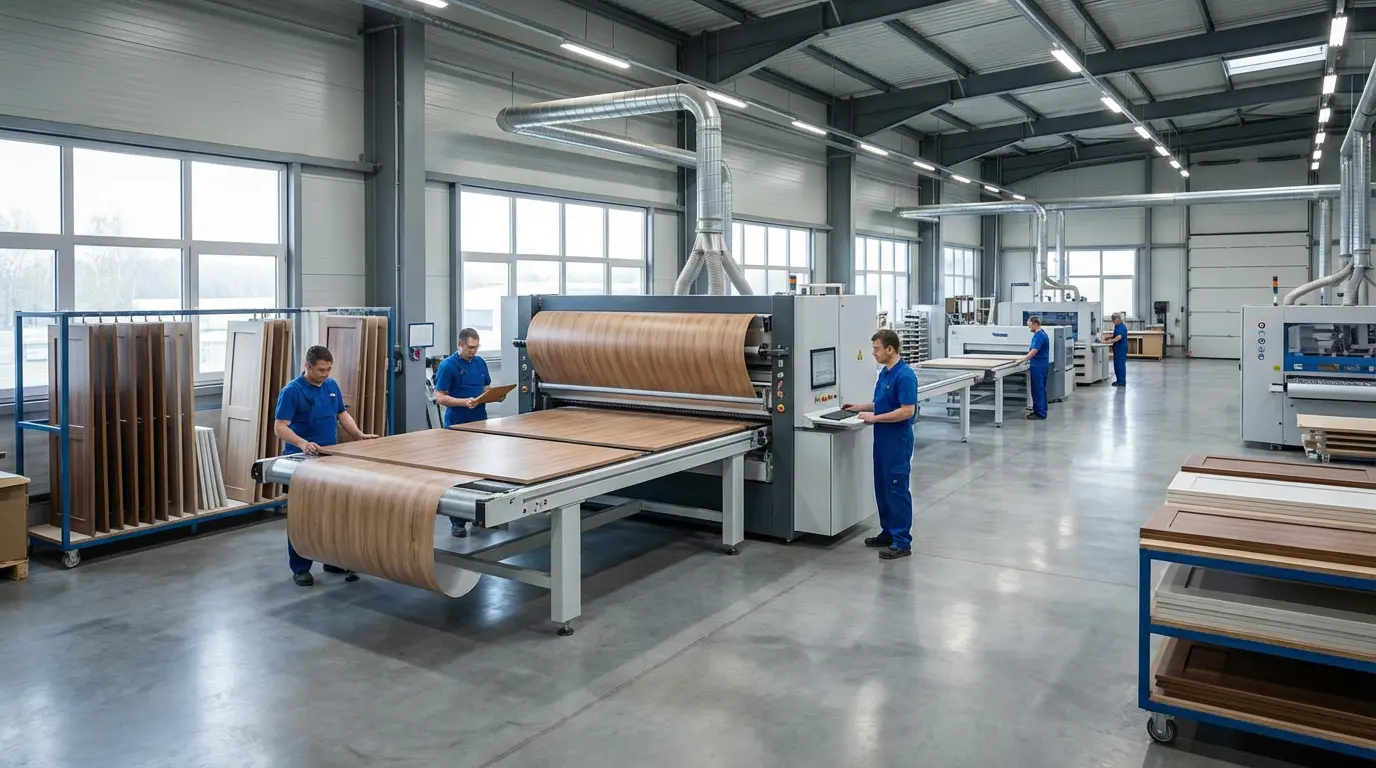
Membrane pressing process using Wood PVC Film
Diverse Applications and Project Impact Across Industries
Commercial Interior Design and Furniture
Furniture manufacturing drives the bulk of demand for Wood PVC Film. It is the standard finish for modular office furniture, including desks, cubicle dividers, and filing cabinets. The global PVC Decorative Film market is projected to grow from USD 4.2 billion in 2023 to USD 7.1 billion by 2032, fueled largely by this sector.
In hospitality, hotel interiors utilize these films for headboards, wardrobes, and bedside tables. The material’s resistance to spills and scratches makes it perfect for the high turnover and heavy usage typical of hotel rooms. Retail fixtures also benefit, as the film can be quickly produced to match seasonal store themes or specific brand colors.
Construction and Architecture
Architects rely on Wood PVC Film for interior elements where real wood is simply impractical.
- Wall Panels: Large-format decorative panels for lobbies and corridors.
- Ceiling Tiles: Lightweight, wood-look tiles that add warmth to commercial spaces without the structural weight of timber.
- Door Skins: Interior doors surfaced with PVC film offer the look of solid wood but are lighter and far more resistant to warping.
- Window Profiles: PVC film wraps around aluminum or UPVC window profiles, giving the exterior and interior a premium wood aesthetic while maintaining the frame’s thermal efficiency.
Niche Industrial Applications
Beyond standard construction, Wood PVC Film serves specialized industrial niches:
- Automotive & Marine: Used for dashboard inlays and interior trim in vehicles and boats. The film’s moisture resistance is vital in marine environments where salt air and humidity would destroy wood veneers.
- Exhibition Booths: Trade show structures require lightweight, durable, and visually striking materials that can be assembled and disassembled repeatedly.
- Cleanrooms & Healthcare: The non-porous surface prevents bacterial growth and withstands rigorous cleaning protocols, making it suitable for cabinetry in clinics and laboratories.
Enhancing Project Aesthetics with Custom Patterns
In competitive B2B markets, differentiation is everything. We collaborate with clients to develop custom patterns, incorporating subtle logo integration within a wood grain or hybrid designs that blend wood textures with metallic or stone elements.
For instance, a recent commercial project required a “whitewashed oak” look with a specific cool-grey undertone to match the client’s corporate branding. By adjusting the base film color and the print cylinder ink density, we achieved a bespoke finish. This became a signature element of their interior design, enhancing their brand identity across multiple locations.
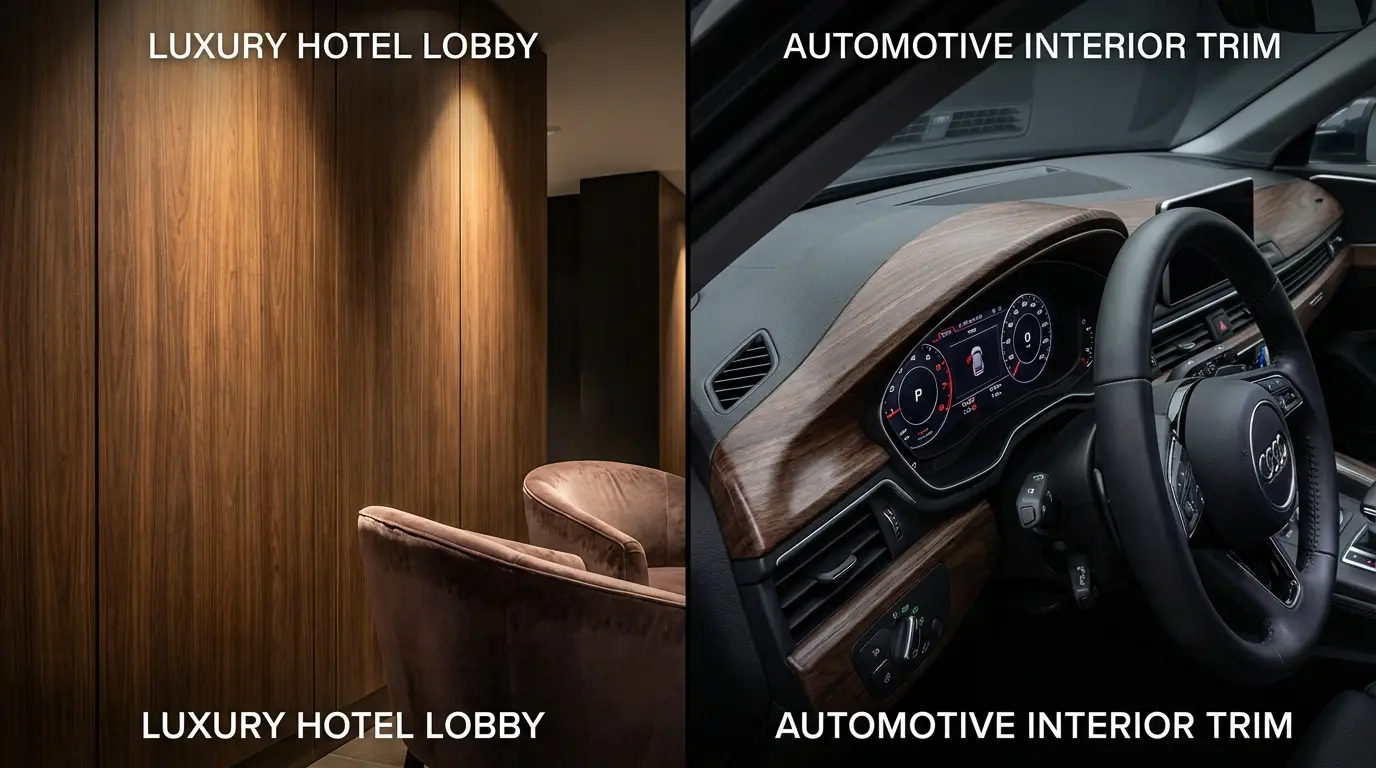
Diverse applications of Wood PVC Film in architecture and automotive
Manufacturing Excellence & Quality Control: Your Trusted Wood PVC Film Supplier
Advanced Production Lines and Technology
Our factory operates state-of-the-art calendering and laminating lines capable of producing films with micron-level precision. We utilize multi-station rotogravure printing presses that can apply up to six layers of ink, creating depth and color complexity that rivals natural wood.
The lamination process bonds the clear wear layer to the printed base under high heat and pressure, fusing them into a singular, inseparable sheet. This prevents delamination—a common failure point in lower-quality films. Our equipment allows for width customization to suit different lamination machinery, significantly reducing scrap for our clients.
Rigorous Quality Assurance Protocols
Quality isn’t inspected into the product; it is manufactured into it. However, we verify this through a stringent QA process governed by ISO 9001 standards.
1. Raw Material Inspection: We test resin purity and pigment stability before production even begins.
2. In-Process Checks: Automated laser gauges monitor thickness uniformity in real-time. Color consistency is checked against a master sample under controlled lighting to ensure ΔE (Delta E) values remain within tight tolerances.
3. Final Product Testing: Every batch undergoes mechanical testing. We verify Impact Strength (5 – 10 kJ/m²) and Tensile Strength to ensure the film will perform exactly as promised during your manufacturing process.
International Certifications and Compliance
We understand that global B2B buyers must navigate complex regulatory landscapes. Our products are certified to meet international safety and environmental standards.
- REACH Compliance: Ensures our chemical usage meets European Union safety regulations.
- RoHS: Guarantees the absence of hazardous substances.
- Formaldehyde Emission: Our films are tested to ensure they do not contribute to indoor air pollution, a critical factor for LEED-certified building projects.
Commitment to R&D
The market never stands still, and neither do we. Our R&D team constantly experiments with new additives to improve scratch resistance and UV stability. We are currently developing next-generation films with enhanced anti-bacterial coatings and bio-based plasticizers to further reduce our carbon footprint.
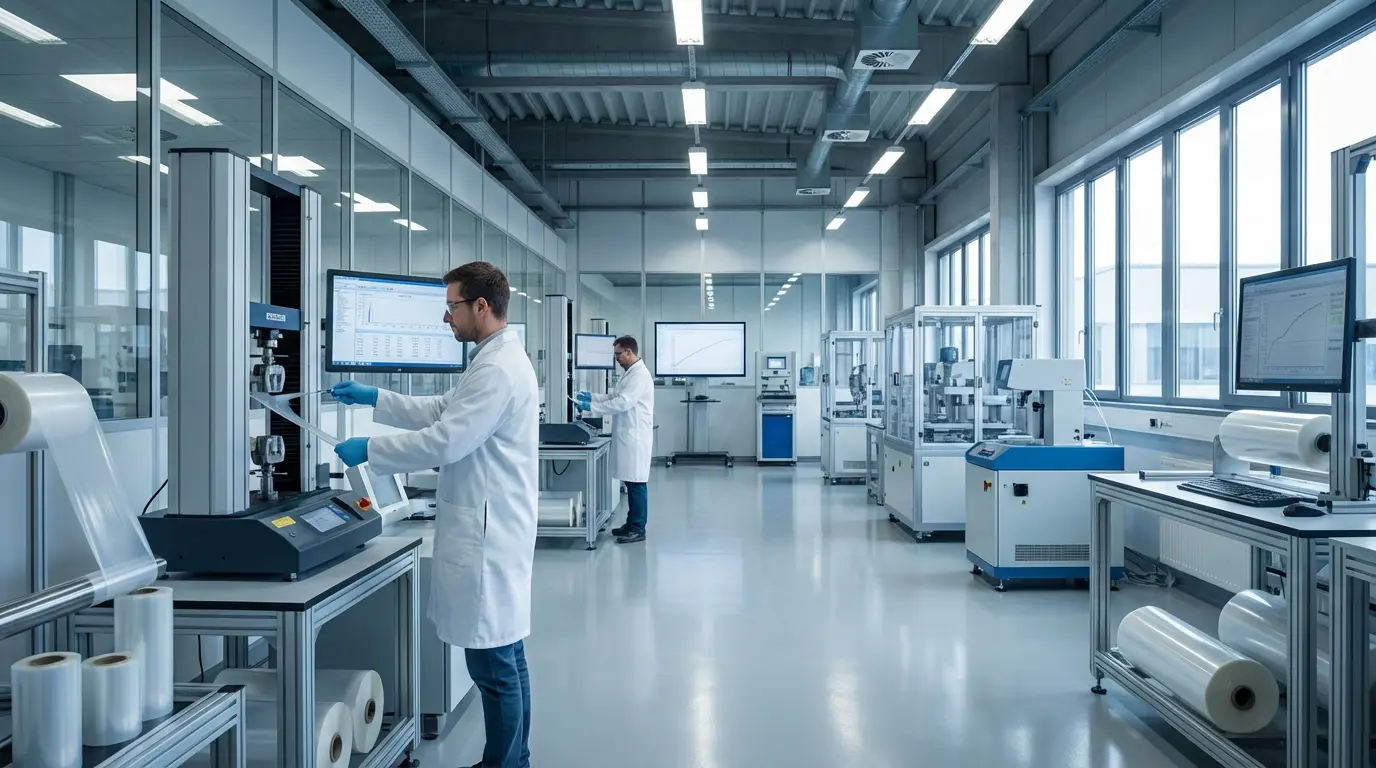
Quality assurance testing of PVC film
Navigating OEM & Custom Pattern Orders: A Seamless Procurement Process
The OEM/ODM Consultation Phase
Creating a custom Wood PVC Film begins with a collaborative consultation. Whether you provide a physical wood sample, a digital file, or a Pantone reference, our design team works to replicate it, analyzing the grain structure, color tones, and surface texture.
We then produce lab-scale samples for your approval. This stage is critical for verifying that the color matches your requirements under your specific facility lighting or end-use environment. We do not proceed to mass production until you sign off on the “Golden Sample.”
MOQs and Lead Times
We strive to support businesses of various scales. While Minimum Order Quantities (MOQ) generally apply due to the setup requirements of rotogravure printing cylinders (typically around 1,000 – 3,000 meters depending on the pattern), we offer flexibility for trial orders.
Lead times are influenced by cylinder engraving (for new patterns) and production scheduling. Generally, standard stock items can ship within days, while custom OEM orders may require 2-4 weeks. We provide transparent timelines upfront so you can plan your project schedules accurately.
Packaging and Global Logistics
To ensure your material arrives in pristine condition, we utilize industrial-grade packaging. Rolls are wrapped in protective foam, suspended in boxes to prevent flat spots, and palletized for forklift handling.
We offer comprehensive shipping solutions, including FCL (Full Container Load) and LCL (Less than Container Load) options. Our logistics team is well-versed in Incoterms and can handle export documentation, ensuring smooth customs clearance at your destination port.
After-Sales Support and Warranty
Our partnership extends beyond the point of sale. We provide technical support to assist your production team with machine settings (temperature, speed, pressure) to optimize the application of our film. Should any quality issues arise, our claims process is straightforward and backed by our warranty policy, ensuring you are never left with unusable material.
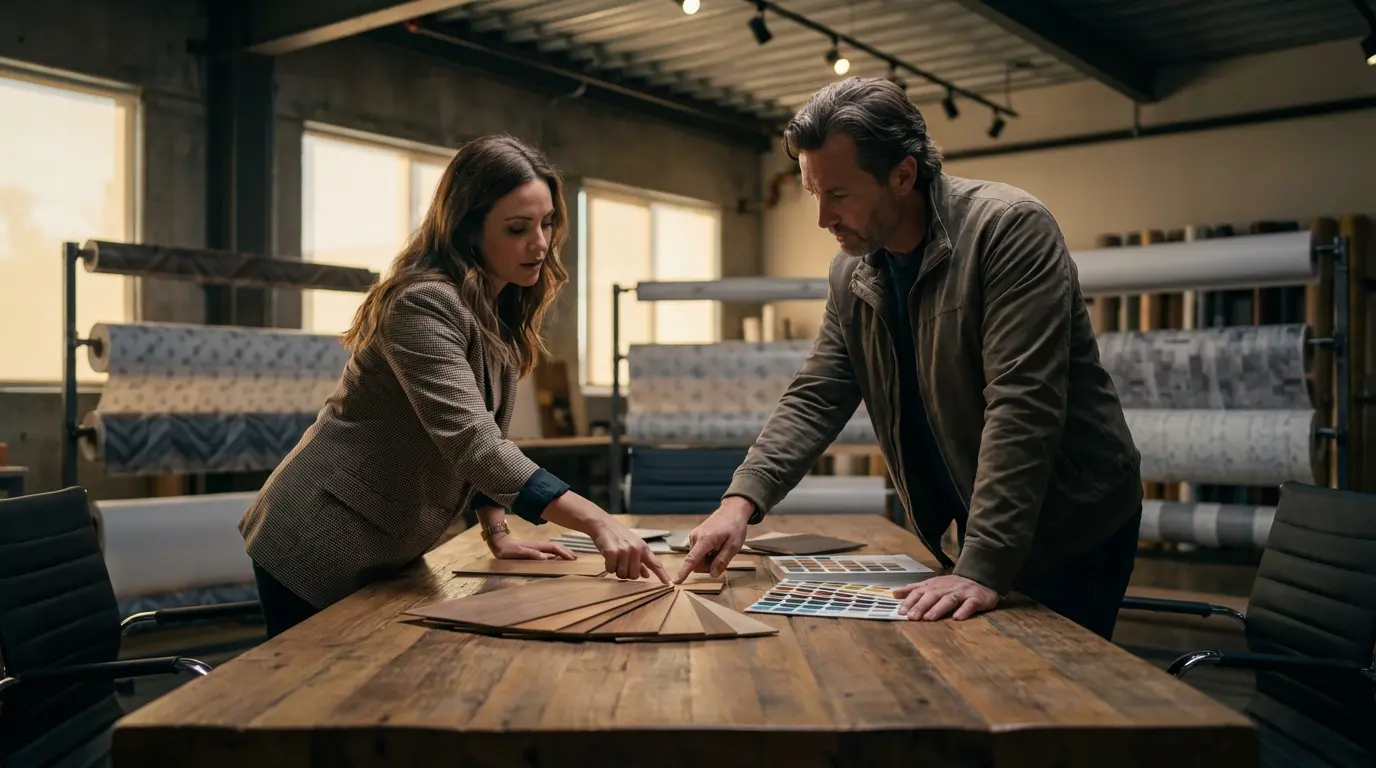
OEM consultation for custom Wood PVC Film patterns
Frequently Asked Questions
Q1: What is the typical lifespan of Wood PVC Film in high-traffic commercial applications?
Wood PVC Film significantly outlasts natural wood veneers in high-traffic areas due to its superior resistance to abrasion and moisture. While wood veneers may chip, fade, or require refinishing within 3-5 years, high-quality PVC film can maintain its aesthetic and structural integrity for 10-15 years or more, depending on the thickness of the wear layer.
Q2: Can Wood PVC Film be used in environments with specific regulatory requirements, like fire safety or hygiene?
Absolutely. Our films are manufactured with an Oxygen Index of ≥40, offering excellent flame retardancy suitable for commercial building codes. Additionally, the non-porous surface is inherently hygienic and easy to sanitize, making it compliant for use in healthcare facilities and food service areas where strict hygiene protocols are enforced.
Q3: How do I ensure color consistency across large, multi-batch custom orders?
We utilize a strict “Golden Sample” retention policy. A master sample from the initial approved run is kept in a climate-controlled archive. For every subsequent re-order, new production is color-matched against this master sample using digital spectrophotometers. This ensures ΔE values remain within an imperceptible tolerance range.
Q4: What is the process and timeline for requesting custom patterns?
The process involves three steps: 1) You submit a physical sample or high-res image. 2) We create a new print cylinder and produce a lab sample (approx. 7-10 days). 3) Upon your approval, we schedule mass production (approx. 10-15 days). The total lead time for a new custom pattern is typically 3-4 weeks.
The Bottom Line
Wood PVC Film has evolved into a superior, versatile, and sustainable alternative to traditional wood. It offers unmatched durability, design flexibility, and cost-efficiency for B2B projects. With technical advantages like high tensile strength, moisture resistance, and flame retardancy, it meets the demanding standards of modern construction and furniture manufacturing.
Partnering directly with a factory ensures access to cutting-edge manufacturing and stringent ISO 9001 quality control, as well as seamless OEM and custom pattern capabilities. Whether you need to replicate a rare timber species or develop a unique brand texture, factory-direct supply guarantees consistency and competitive pricing.
Elevate your next architectural, construction, or manufacturing project with premium, customizable Wood PVC Film. Contact our expert team today for a free consultation, to request samples, or to discuss your specific OEM requirements. Let us be your trusted factory direct supplier for innovative surfacing solutions.
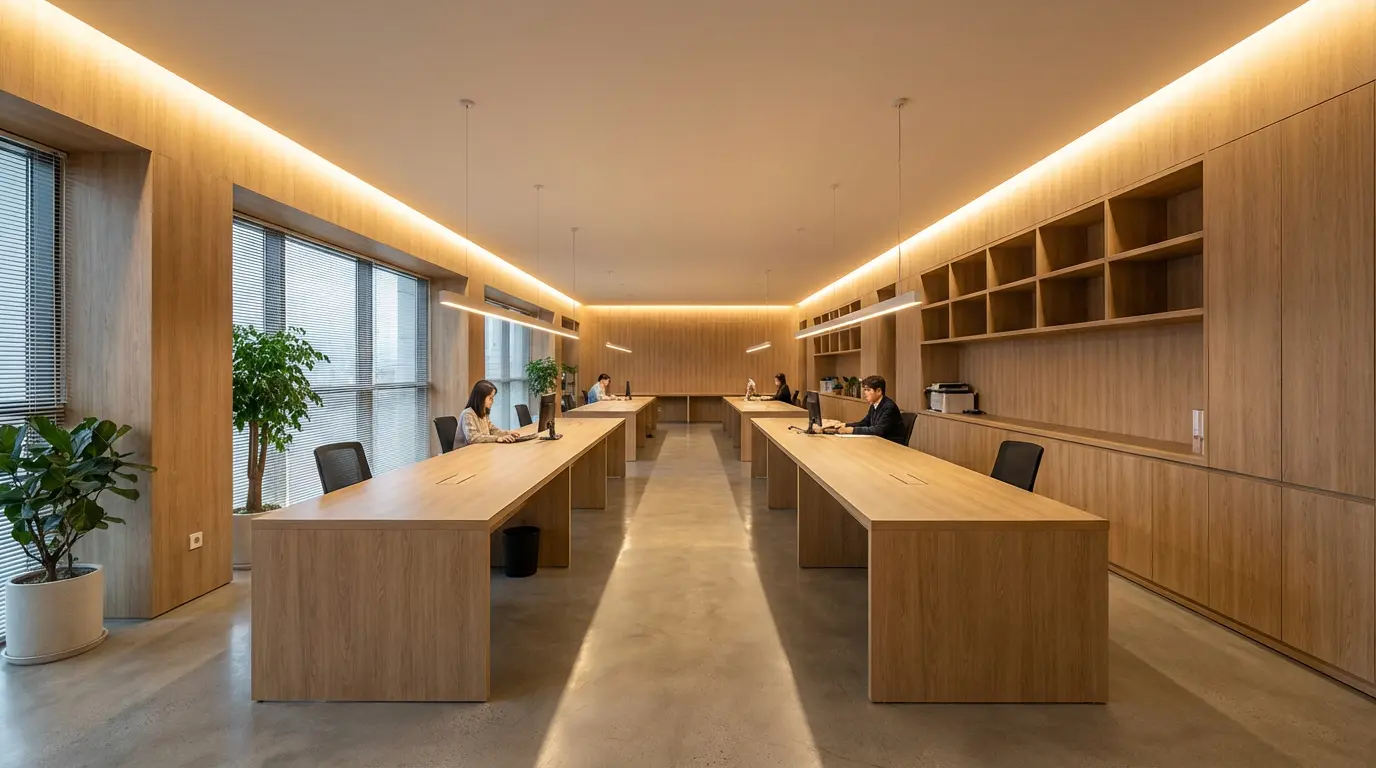
Complete modern office interior finished with Wood PVC Film